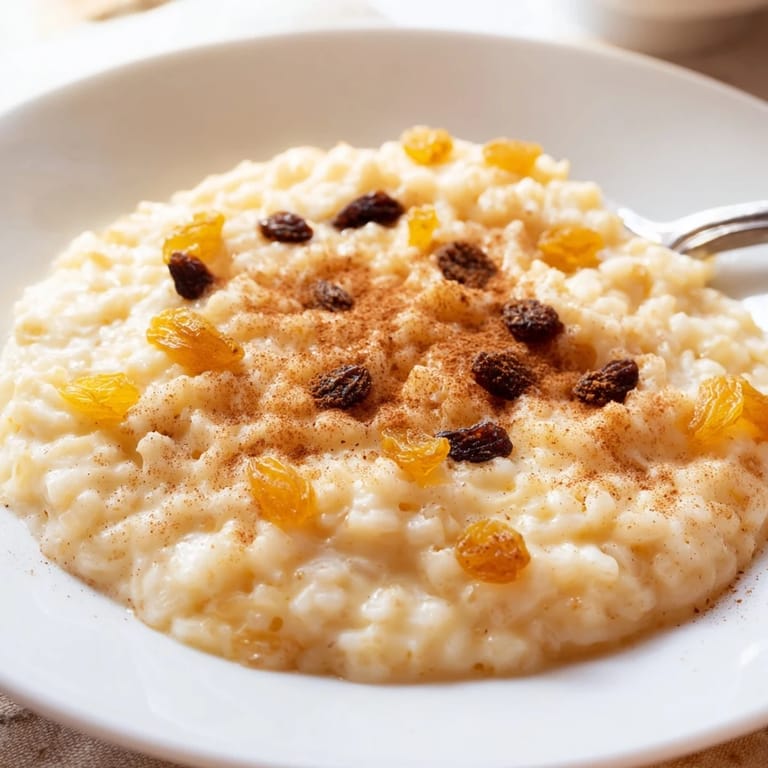
 Save to Pinterest
 My grandmother kept a ceramic pot in her kitchen just for rice pudding, a heavy thing with a crackled glaze that had seen decades of slow baking. When I finally asked her to teach me, I expected a fussy recipe, but it turned out to be the opposite—just rice, milk, and patience letting the oven do the real work. The first time I made it alone, I almost forgot to stir halfway through, but that mistake taught me something: the pudding forgives you. It just wants time and gentle heat.
I served this to a friend on a cold Sunday afternoon, and she actually got quiet while eating it—not awkward quiet, but the kind where you know the food is hitting exactly right. She asked for seconds before finishing her first bowl, and I realized then that rice pudding is one of those rare dishes that tastes expensive and complicated but costs almost nothing and takes just patience. Every time I make it now, I think of that moment.
Ingredients
- Short-grain white rice (120 g / 2/3 cup): Short-grain rice releases more starch as it cooks, which is what gives this pudding its signature creamy texture—medium or long-grain rice will leave it grainy and loose.
- Whole milk (1 liter / 4 cups): This is your base, and using whole milk instead of low-fat makes a real difference in richness and mouthfeel.
- Heavy cream (60 ml / 1/4 cup): A quarter cup of cream pushes the pudding into luxurious territory without making it feel heavy.
- Unsalted butter (40 g / 3 tbsp): Butter melted into the warm milk creates a silky mouthfeel and adds a subtle depth that milk alone can't deliver.
- Granulated sugar (100 g / 1/2 cup): Start with this amount and taste as it cooks—you can always stir in a touch more if you prefer it sweeter.
- Raisins (80 g / 1/2 cup): They plump up beautifully during baking and add natural sweetness and texture, but golden raisins or dried cranberries work just as well.
- Ground cinnamon (1 tsp): Cinnamon is the soul of this pudding—don't skip it or reduce it, as it's what makes people close their eyes and smile.
- Pure vanilla extract (1 tsp): Added after removing from heat so the delicate flavor doesn't cook off into nothing.
- Fine salt (1/4 tsp): Salt is the secret that makes all the sweetness and spice come into focus instead of feeling flat.
- Ground nutmeg (for garnish): A light dusting on top adds a whisper of warming spice and looks intentional.
Tired of Takeout? 🥡
Get 10 meals you can make faster than delivery arrives. Seriously.
One email. No spam. Unsubscribe anytime.
Instructions
- Set the stage:
- Preheat your oven to 160°C (325°F) and lightly butter a 2-liter baking dish—this lower, slower temperature is what makes the pudding creamy instead of baked-custard firm.
- Rinse the rice:
- Run the rice under cold water, stirring it with your fingers until the water runs completely clear—this removes excess starch on the outside and keeps the pudding from turning gluey.
- Warm the milk mixture:
- In a large saucepan, combine the milk, cream, sugar, butter, cinnamon, and salt over medium heat, stirring often until the sugar dissolves and the milk is steaming but not boiling—you want to smell the cinnamon wake up.
- Bring it together:
- Stir in the drained rice and raisins, then remove from heat and add the vanilla extract right away so it doesn't lose its delicate flavor to the heat.
- Transfer to the dish:
- Pour everything into your buttered baking dish and stir once more to distribute the rice and raisins evenly.
- First bake (covered):
- Cover the dish tightly with aluminum foil and bake for 55 minutes, then pull it out and stir gently—this prevents a crust from forming on top and helps the rice cook evenly.
- Final bake (uncovered):
- Remove the foil and bake for another 15 to 20 minutes until the pudding is thick and creamy and the rice grains are tender—the top will develop a subtle golden tone.
- Rest and serve:
- Let it cool for 10 minutes before serving, which lets the pudding set up just slightly and makes it easier to portion. Serve warm or chilled, with a light dust of nutmeg on top.
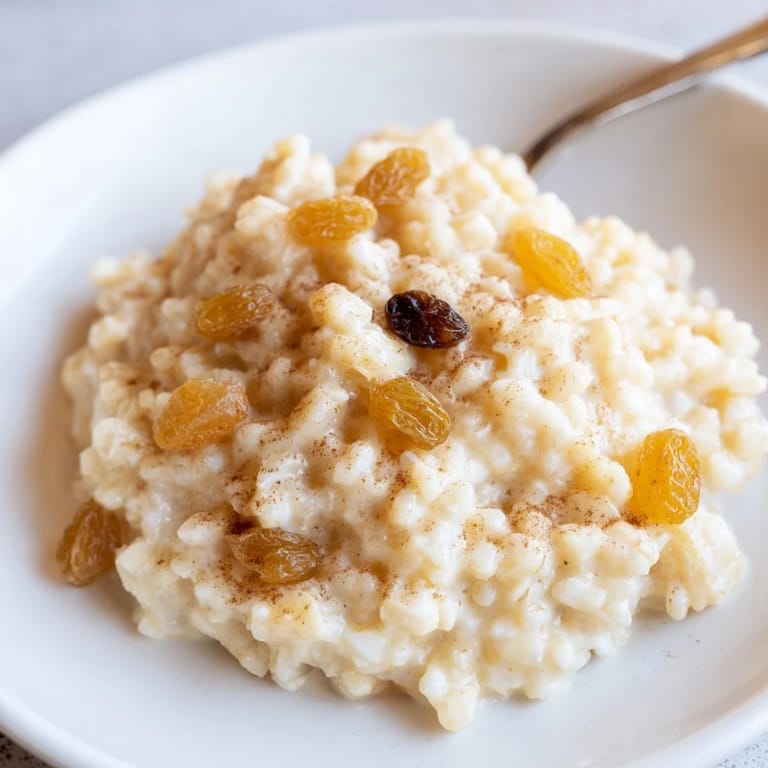 Save to Pinterest
 There's something almost meditative about watching rice pudding bake, seeing it transform from a loose mixture into something velvety and complete just from time and gentle heat. It taught me that not every dessert needs a list of fancy techniques—sometimes the best things come from knowing when to step back.
The Secret to Silky Texture
The creaminess here comes from two places: the starch in the rice releases gradually and thickens the milk, and the cream and butter create a rich base that coats your mouth in the best way. Short-grain rice is essential because those stubby grains break down slightly and release more starch than longer varieties, which is what transforms liquid milk into something that actually coats a spoon. I learned this after once trying to make it with arborio rice left over from risotto, which gave me a gummy pudding instead of a creamy one.
Raisins, Timing, and Flavor Building
The raisins go in before baking so they have time to absorb the milk and plump up into little pockets of concentrated sweetness scattered throughout. Cinnamon added at the beginning rather than sprinkled on top means it infuses into every bite instead of sitting on the surface. I once added the cinnamon only at the very end, thinking it would be brighter and more noticeable, but the pudding tasted like cinnamon-flavored pudding rather than pudding that lived and breathed cinnamon—completely different.
Serving and Keeping
This pudding is just as good served warm with a drizzle of stewed fruit, or chilled and eaten straight from a small bowl with a spoon. It actually keeps in the refrigerator for up to four days, which means you can make it ahead for a dinner party and spend your time on other things. If you want to dress it up, a dollop of whipped cream and a scatter of toasted nuts turns the simple into the fancy.
- Serve it warm right from the oven for maximum comfort, or let it chill overnight and serve cold for something a bit lighter and more spoonable.
- Golden raisins taste slightly more floral than regular raisins, while dried cranberries add a subtle tang if you want to break the sweetness.
- A tiny pinch of nutmeg on top looks beautiful and adds a finishing note of warmth that makes people notice.
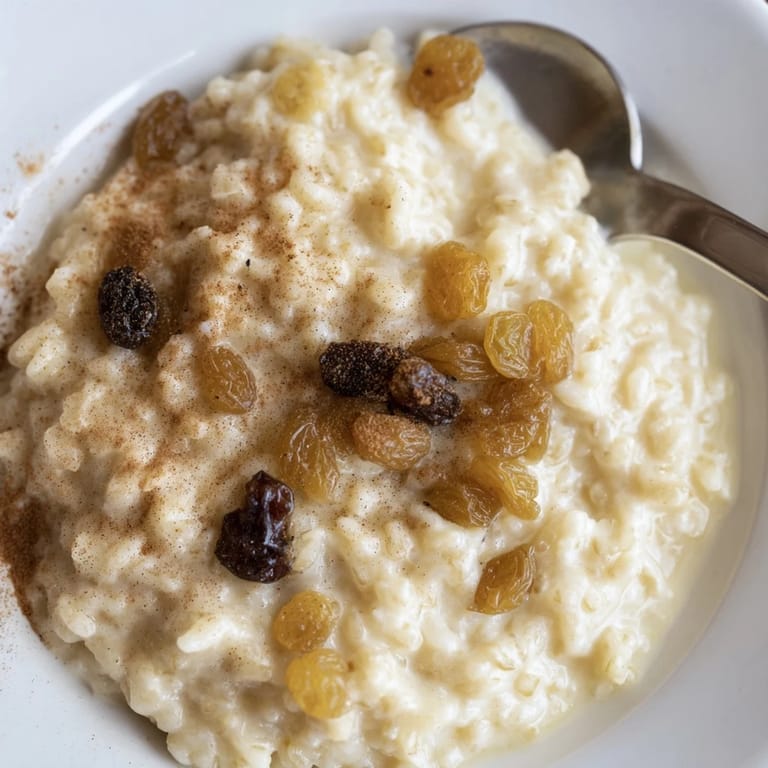 Save to Pinterest
 Rice pudding is one of those quiet dishes that asks for nothing but gives everything back in comfort and warmth. Make it once and you'll understand why people have been making it for centuries.
Recipe FAQs
- → What type of rice is best for this pudding?
Short-grain white rice is ideal as it absorbs liquids well and yields a creamy texture after baking.
- → Can I substitute the milk in this dish?
Yes, half the milk can be replaced with coconut milk for added richness and subtle flavor variation.
- → How do raisins affect the flavor and texture?
Raisins add natural sweetness and bursts of chewy texture that complement the smooth, creamy rice base.
- → Why is the pudding slow-baked instead of cooked on the stove?
Slow baking allows the rice to cook evenly while thickening the mixture gently, preventing curdling and creating a rich, custard-like texture.
- → Can I use different dried fruits instead of raisins?
Yes, golden raisins or dried cranberries can be used to add different flavor notes and visual appeal.
- → What is a good way to serve this comforting dish?
It can be served warm or chilled, garnished with a sprinkle of ground nutmeg or alongside stewed fruit or whipped cream for extra indulgence.