 Save to Pinterest
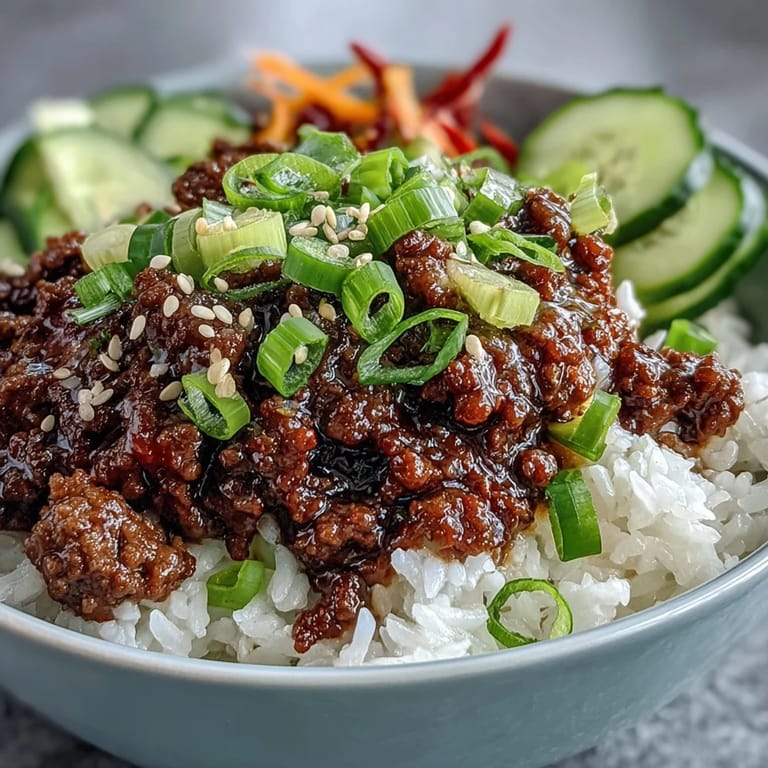
 My kitchen smelled like sesame oil and ginger the first time I assembled one of these bowls, and I realized I'd been overcomplicating Korean food in my head. A friend had mentioned she was tired of takeout prices, so I threw together what felt right—seasoned beef, quick pickled vegetables, and rice—and somehow it tasted like a restaurant but took less than 40 minutes. The tanginess of the pickles cutting through the savory beef became the moment I understood why this bowl keeps showing up on my weeknight rotation.
I made this for my partner on a rainy evening when neither of us wanted to order delivery, and the moment he tried it, he looked up and said, 'You made this?' That small validation—the realization that something so good could come from our own stove—turned it into a regular thing. Now when we have people over for casual weeknight dinners, this bowl is what they ask for.
Ingredients
- Lean ground beef (500 g): I learned to use a spoon to break it into small pieces as it cooks, which helps it absorb the sauce better and creates those caramelized edges that taste incredible.
- Soy sauce (2 tablespoons): This is your savory backbone, so use full-strength stuff—tamari if you need gluten-free, which honestly tastes just as good.
- Toasted sesame oil (1 tablespoon): A little goes a long way; the toasted kind has more flavor, and adding it at the end instead of during cooking keeps that nutty aroma alive.
- Brown sugar (1 tablespoon): It balances the salt and adds a subtle sweetness that makes people guess at the flavors without quite pinning them down.
- Fresh ginger (2 teaspoons, grated): Freshly grated over a microplane makes all the difference—bottled ginger tastes flat by comparison.
- Garlic (3 cloves, minced): Slice it thin or mince it fine so it cooks evenly and doesn't leave any raw, harsh bites.
- Gochujang (1 teaspoon, optional): This Korean chili paste adds heat and umami depth; leave it out if you prefer something mild, or use sriracha instead.
- Green onions (2 stalks, sliced): Add half during cooking for flavor and reserve the rest for garnish so you get both cooked and fresh versions in each bowl.
- Sesame seeds (1 tablespoon, plus more for garnish): Toast them yourself if you can—they taste richer and crunchier than pre-toasted versions.
- Rice or cauliflower rice (4 cups cooked): Whatever base you choose, make sure it's warm and slightly fluffy so the beef sauce clings to it.
- Rice vinegar (1/2 cup): This is what makes the pickles sing; it's gentler and brighter than regular vinegar.
- Carrot, cucumber, and radish (3 cups total, sliced thin): The thinner you slice them, the faster they pickle and the more tender they become.
- Sugar and salt for pickling (1 tablespoon sugar, 1/2 teaspoon salt): These dissolve quickly and help draw out the vegetables' natural sweetness.
Tired of Takeout? 🥡
Get 10 meals you can make faster than delivery arrives. Seriously.
One email. No spam. Unsubscribe anytime.
Instructions
- Make the pickled vegetables first:
- Combine rice vinegar, sugar, and salt in a bowl, stirring until the granules disappear completely. Add your sliced carrots, cucumber, and radish, making sure everything gets coated, then let it sit for at least 15 minutes—the longer you wait, the more tender and flavorful they become. Stir occasionally so they pickle evenly.
- Cook your rice base:
- While the vegetables are pickling, follow the package directions for jasmine rice or cauliflower rice, keeping it warm on the stove or in a rice cooker until you're ready to assemble.
- Brown the beef:
- Heat a large skillet over medium-high heat until it's hot enough that a piece of beef sizzles immediately when it hits the pan. Add all 500 grams of ground beef and use a wooden spoon to break it into small, bite-sized pieces as it cooks, which takes about 5 to 7 minutes until there's no pink left and the edges start to caramelize. Tip any excess fat into a small bowl if there's more than a tablespoon or two pooling in the pan.
- Build the sauce:
- Lower the heat to medium, then add soy sauce, sesame oil, brown sugar, ginger, garlic, and gochujang (if you're using it) directly to the beef. Stir everything together and let it bubble gently for 2 to 3 minutes—you'll know it's ready when your kitchen smells like a Korean restaurant and the mixture looks glossy and clings to the beef.
- Finish with freshness:
- Remove the pan from heat and stir in most of the sliced green onions and sesame seeds, reserving some of each for the top of the bowl.
- Assemble your bowls:
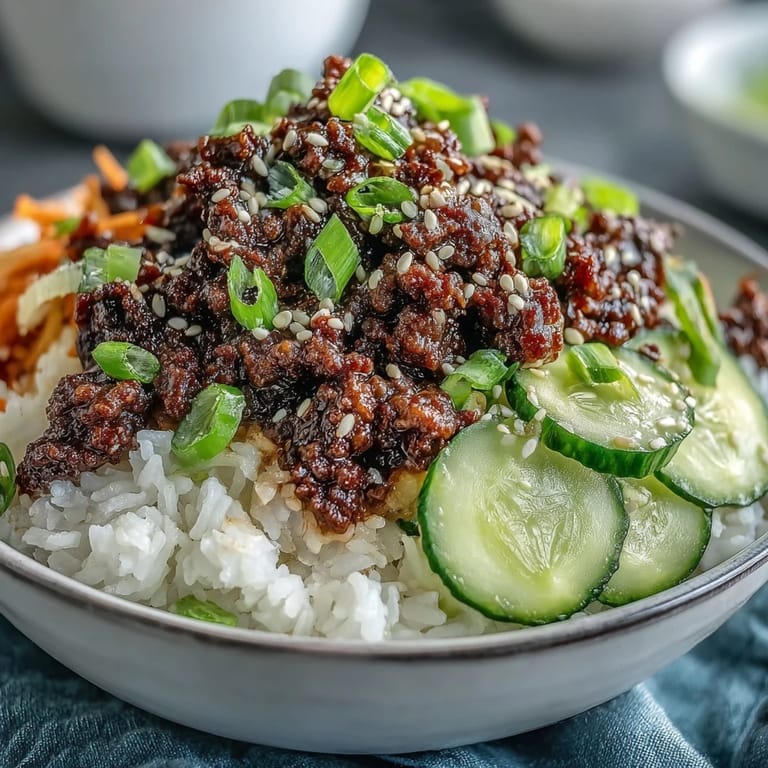
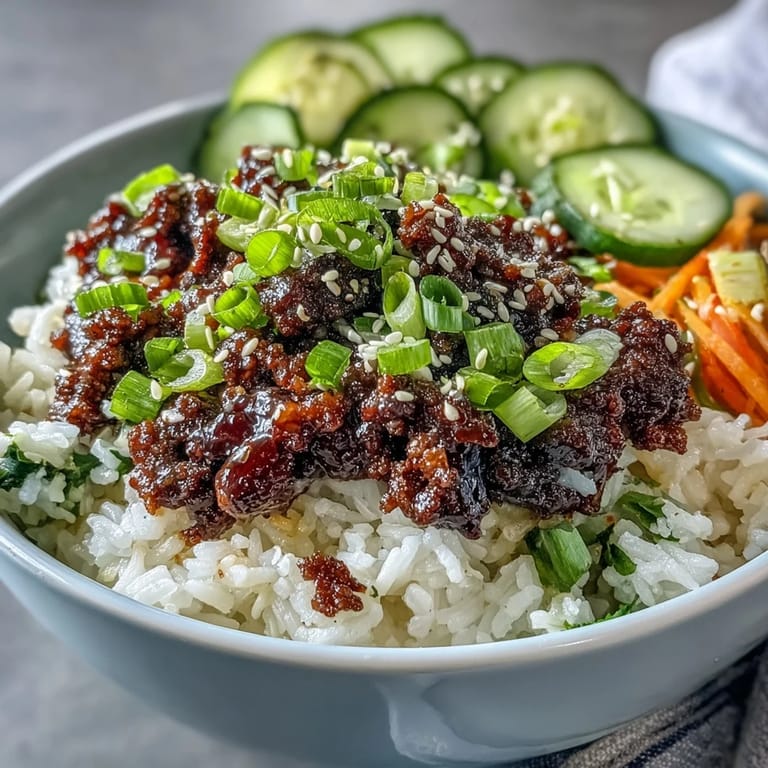
- Divide the warm rice among four bowls, creating a small bed that can cradle the beef and its sauce. Spoon the seasoned beef generously over the rice, then top with a handful of those bright pickled vegetables.
- Garnish and serve:
- Scatter the remaining green onions and sesame seeds over everything, then bring the bowls straight to the table while the beef is still warm and the rice is steaming.
 Save to Pinterest
 There's something about serving this bowl on an ordinary Tuesday that feels a little bit special, like you're giving yourself and the people you're feeding something that tastes like care. It's become the dinner I make when I want to feel competent in the kitchen without spending hours there.
Why Pickled Vegetables Are Your Secret Weapon
The pickled vegetables aren't just a side thought—they're what prevents this bowl from feeling heavy or one-note. That bright, tangy contrast wakes up your palate between bites of rich beef and fills your mouth with freshness that makes you want another spoonful. I've noticed people eat bigger portions when there's something crunchy and acidic to cut through the richness, which is why these vegetables earn their place as a main component rather than a garnish.
Building Your Base: Rice Choices and Their Impact
Whether you choose jasmine rice or cauliflower rice changes the whole feel of the meal. Jasmine rice soaks up the beef sauce like a sponge and gives you those comforting, heavier bites that make you feel satisfied. Cauliflower rice is lighter and lets the beef shine through without adding the starch, which is why I often reach for it on weeknights when I want something that won't leave me sluggish afterward. Both work beautifully, so pick based on what your body or your mood is asking for.
Making It Your Own
Once you make this bowl a few times, you'll start noticing the small tweaks that feel right for you. Some nights I add a fried egg on top for richness and extra protein, letting the yolk run into the beef sauce. Other times I use ground turkey instead of beef, or crumbled tofu when I'm in a vegetarian mood, and honestly the sauce carries everything beautifully either way.
- A squeeze of fresh lime juice over the top just before eating adds brightness that ties everything together.
- If you like more heat, double the gochujang or add a pinch of gochugaru (Korean chili flakes) as a final garnish.
- Thinly sliced mushrooms or a handful of spinach wilts right into the warm beef and adds depth without changing the vibe of the dish.
 Save to Pinterest
 This bowl is proof that weeknight cooking doesn't have to be complicated to taste like something special. Serve it warm, gather around the table, and watch people light up at their first bite.
Recipe FAQs
- → Can I make this dish spicy?
Yes, add gochujang or sriracha to the beef mixture while cooking. Start with 1 teaspoon and adjust to your preferred heat level.
- → How long do the pickled vegetables last?
The quick-pickled vegetables will keep in an airtight container in the refrigerator for up to 1 week. They actually develop more flavor after sitting for a day.
- → Can I use other proteins?
Ground turkey, chicken, or crumbled tofu work well as alternatives. Adjust cooking time accordingly—turkey and chicken may need slightly longer to brown.
- → Is cauliflower rice a good substitute?
Absolutely. Cauliflower rice reduces carbs significantly while maintaining the bowl's structure. It absorbs the savory beef juices beautifully.
- → Can I prepare components ahead?
The pickled vegetables can be made 2-3 days ahead. Cooked beef keeps for 3-4 days in the refrigerator. Reheat gently and assemble when ready to serve.
- → What makes this gluten-free?
Use tamari instead of soy sauce and verify your gochujang is certified gluten-free. The remaining ingredients naturally contain no gluten.