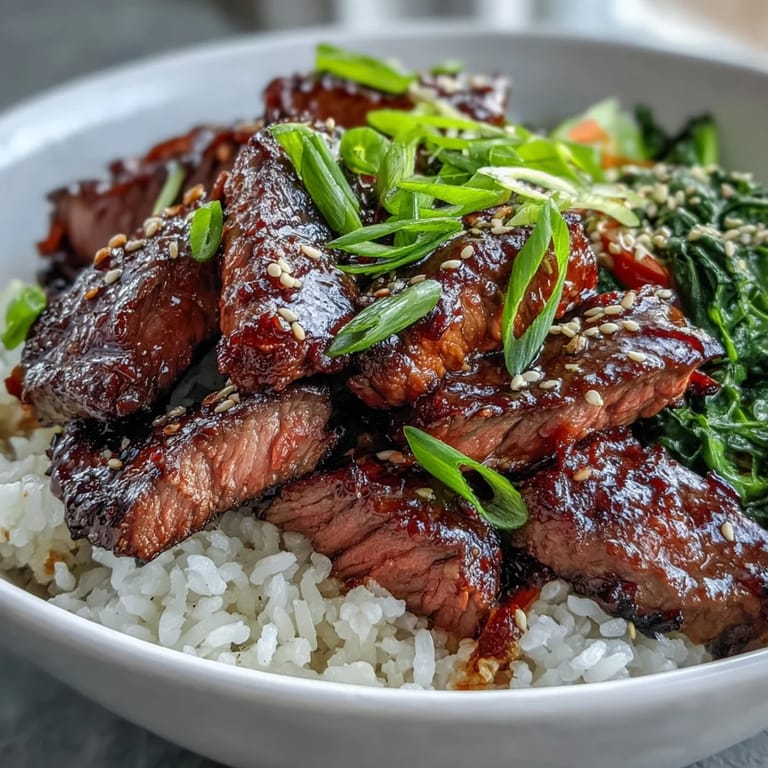
 Save to Pinterest
 My roommate came home one evening smelling like the teriyaki place down the street, and I knew exactly what had happened—she'd caved to a craving. But watching her demolish that bowl made me realize I could nail this at home without the delivery fee or the wait. The first time I made it, the kitchen filled with this incredible aroma of garlic and ginger hitting hot oil, and I understood why she couldn't resist.
I made this for my sister when she was visiting, and she kept sneaking bites straight from the wok before I could even plate it. There's something about how the glossy sauce clings to the beef that makes it impossible to wait, and honestly, I didn't stop her—watching someone genuinely enjoy food you've made is its own kind of magic.
Ingredients
- Flank steak or sirloin, thinly sliced (500 g): The thin slicing is what makes this work—it cooks in minutes and absorbs the sauce like a sponge, so don't skip the knife work or use pre-cut beef if you can help it.
- Cornstarch (2 tbsp total): One coat for the beef keeps it tender while creating a slight texture that helps the sauce stick, and the slurry thickens the glaze to that glossy finish that makes it all shine.
- Soy sauce (80 ml): This is your backbone, but taste as you go because different brands have different salt levels—I learned this the hard way after oversalting an entire batch.
- Mirin (60 ml): This sweet rice wine is what gives teriyaki its signature subtle depth; don't substitute it with plain sugar or you'll lose that complexity.
- Honey or brown sugar (2 tbsp): A little extra sweetness rounds out the savory notes, and honey dissolves more cleanly than sugar in the warm sauce.
- Rice vinegar (2 tbsp): Just enough brightness to cut through the sweetness and keep the sauce from feeling cloying.
- Garlic and ginger (2 cloves and 1 tsp): Fresh is non-negotiable here—jarred versions fade into the background, but fresh aromatic paste these deliver makes the whole dish sing.
- Carrots, bell pepper, and broccoli: Use whatever vegetables you have on hand, but keep them roughly the same size so they cook evenly and stay crisp rather than turning to mush.
- Spring onions (2, plus extra for garnish): The raw ones sprinkled on top add a sharp onion bite that balances all the richness.
- Sesame seeds (1 tbsp): Toast them lightly if you have time—this tiny step transforms them from forgettable garnish to something people actually notice.
- White or brown rice (2 cups cooked): Make it fresh if possible so it's fluffy and absorbs the sauce rather than turning into a dense paste.
- Vegetable oil (1 tbsp): Use something with a high smoke point like canola or peanut oil so the beef sears instead of steams.
Tired of Takeout? 🥡
Get 10 meals you can make faster than delivery arrives. Seriously.
One email. No spam. Unsubscribe anytime.
Instructions
- Build your glaze foundation:
- Combine soy sauce, mirin, honey, rice vinegar, garlic, and ginger in a small saucepan and bring it to a gentle simmer—you'll see it bubble around the edges and smell that incredible savory-sweet perfume rise. Whisk in your cornstarch slurry and let it cook for a couple of minutes until it turns glossy and coats the back of a spoon, then set it aside to cool slightly.
- Prep the beef for the pan:
- Toss your thinly sliced beef with cornstarch until each piece is lightly coated—this seems like a small detail, but it's what keeps the meat tender and gives the sauce something to cling to. Don't skip this step or you'll end up with tough, bare strands of beef.
- Sear the beef until it's golden:
- Heat your oil in a large skillet or wok over high heat until it shimmers, then add the beef in a single layer and let it sit for a minute to develop color. Stir-fry for another minute or two until the edges are browned and the inside is just cooked through—you want it still tender, not gray and overcooked, so watch the clock.
- Cook your vegetables until tender-crisp:
- In the same skillet, add your carrots, bell pepper, and broccoli and stir-fry until they've softened just enough to bite through but still have a little spring to them. This takes about three to four minutes, and you'll know they're ready when the broccoli turns bright green and the carrots start to look translucent at the edges.
- Bring it all together with the sauce:
- Return the beef to the pan, pour your teriyaki sauce over everything, and toss it all together until every piece is coated in that glossy richness. A quick minute of heat brings it all to a simmer and melds the flavors together.
- Plate and garnish with intention:
- Divide your rice among bowls, pile the beef and vegetables on top, and finish with a sprinkle of fresh spring onions and sesame seeds—these last touches aren't decoration, they're what make each bite interesting.
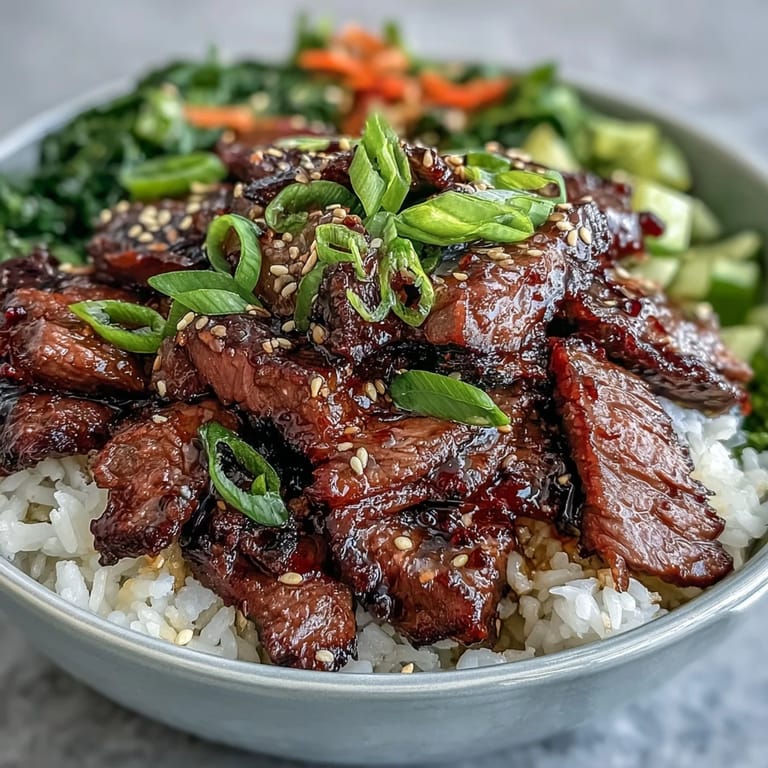 Save to Pinterest
 My partner made this after watching me do it once, and brought it to me on a quiet Sunday morning as a surprise breakfast-for-dinner kind of thing. There's a certain tenderness in someone learning your recipes and making them for you, especially when they get the details right—the sauce glossy, the vegetables still crisp, the rice perfectly warm.
The Secret to Restaurant-Quality Beef
The difference between homemade and takeout often comes down to heat and timing, not complexity. A properly hot pan sears the beef quickly so it stays tender, and slicing it thin means you're not fighting a thick steak that needs five minutes to cook through. I used to overthink this dish until I realized the magic is in respecting the ingredients and not fussing with them too much.
Making It Your Own
This bowl is endlessly adaptable once you understand the core technique, so don't feel locked into my vegetable choices. Snap peas, mushrooms, edamame, or even zucchini all work beautifully, and I've swapped chicken and tofu in when beef wasn't on hand and gotten just as delicious results. The sauce doesn't care what protein you're glazing, as long as you're confident with your pan.
Timing and Temperature Tricks
Getting everything to finish at the same time is mostly about prep work—slice and measure everything before you turn on the heat, so you're never scrambling mid-cook. The entire dish comes together in about twenty minutes of active cooking, which means you can make this on a weeknight without feeling like you're sacrificing quality for speed.
- Have your rice ready and hot before you start cooking anything else, so it's never sitting cold while you finish the beef.
- If your vegetables are thick or dense like broccoli, consider cutting them smaller so they cook faster and stay crisp.
- Taste the sauce before serving and adjust—a little more soy sauce adds saltiness, more vinegar brightens it, and a touch of honey rounds out any sharpness.
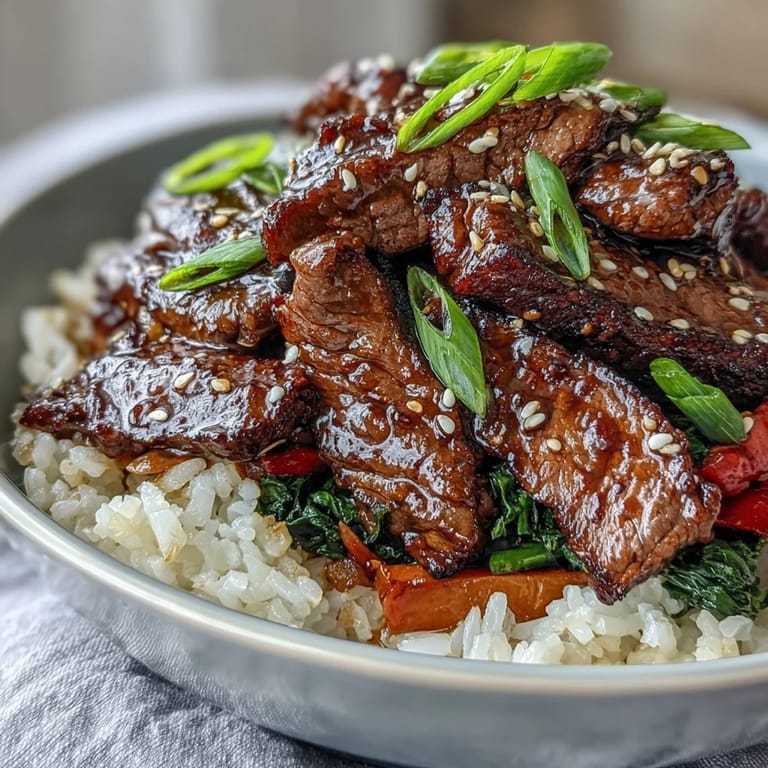 Save to Pinterest
 This dish has become my go-to when I want something that tastes like I spent hours cooking but actually took half that time. It's the kind of meal that reminds you why cooking for yourself is worth it.
Recipe FAQs
- → What cut of beef works best?
Flank steak or sirloin are ideal choices. Slice the beef thinly against the grain for maximum tenderness. You can also use ribeye or skirt steak depending on preference and availability.
- → Can I make the teriyaki sauce ahead?
Yes, prepare the sauce up to 3 days in advance and store it in an airtight container in the refrigerator. Reheat gently before tossing with the beef and vegetables.
- → How do I get the sauce to thicken properly?
The cornstarch slurry is essential for achieving that glossy, thickened consistency. Whisk it into the simmering sauce gradually and continue stirring for 2-3 minutes until it coats the back of a spoon.
- → What vegetables can I substitute?
Snap peas, edamame, mushrooms, or bok choy work beautifully. Feel free to use whatever crisp vegetables you have on hand for a colorful, nutritious bowl.
- → Is this gluten-free?
Traditional soy sauce contains wheat, but you can easily make this gluten-free by substituting tamari or a certified gluten-free soy sauce. Ensure all other ingredients are certified gluten-free as well.