 Save to Pinterest
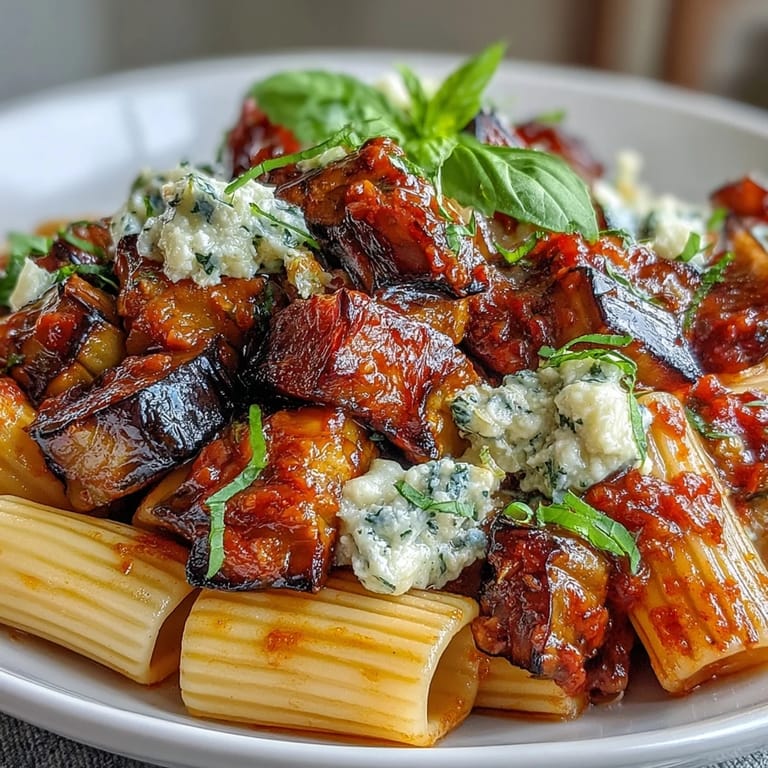
 My aunt's kitchen in Palermo smelled like charred eggplant and basil the first time she made this for me, and I watched her move through each step with the kind of ease that only comes from making something a hundred times before. She insisted that Pasta alla Norma wasn't fancy or complicated—just honest food that lets each ingredient speak for itself. That afternoon, sitting at her worn wooden table with a plate of this dish in front of me, I understood why she loved it so fiercely. The crispy eggplant, the deep red sauce, the sharp bite of ricotta salata—it all made sense together. Now whenever I make it, I'm trying to recreate that feeling of simplicity meeting pure flavor.
I made this for friends who were skeptical about eggplant, and watching their faces when they tasted how creamy and rich those roasted pieces were made me realize this dish is a quiet converter. One friend actually went back for seconds and asked for the recipe, which felt like winning an argument I never had to make. That's the power of Pasta alla Norma—it doesn't lecture you about vegetables, it just shows you why they matter.
Ingredients
- Large eggplant (about 400 g), cut into 2 cm cubes: The size matters here because bigger chunks stay firm instead of turning mushy, and the flat surfaces crisp up beautifully in the oven.
- Garlic cloves, finely chopped (2): Fresh garlic is non-negotiable, and chopping it yourself means you catch that exact moment it hits the hot oil before it burns.
- Medium onion, finely chopped (1): This builds the base sweetness that balances the acidity of the tomatoes.
- Fresh basil, leaves picked (1 small bunch): Pick it just before cooking if you can, and tear it by hand rather than cutting to keep the oils intact.
- Rigatoni or penne pasta (400 g): The ridges in these shapes catch the sauce in a way that smooth pasta never quite does.
- Canned whole peeled tomatoes (800 g): Whole tomatoes are your friend because you control how much you break them down, which means better texture and flavor.
- Extra-virgin olive oil (3 tbsp total): Use oil you actually like tasting, because it's doing real work here, not just lubricating the pan.
- Dried chili flakes (1/2 tsp, optional): A whisper of heat draws out all the other flavors, but only if you want it.
- Salt and freshly ground black pepper: Season in layers—when you cook the onion, when you add the sauce, and again at the end.
- Ricotta salata, grated or crumbled (80 g): This salty, sharp cheese is what makes the whole dish sing, so don't skip it or replace it lightly.
Tired of Takeout? 🥡
Get 10 meals you can make faster than delivery arrives. Seriously.
One email. No spam. Unsubscribe anytime.
Instructions
- Heat your oven and prepare the eggplant:
- Get your oven to 220°C (430°F) and while it preheats, toss your eggplant cubes with 2 tablespoons of olive oil and a good pinch of salt. Spread them on a baking tray in a single layer so they're not crowded, and slide them in for 25 to 30 minutes, turning them halfway through—this is when you'll start to smell something magical.
- Build your sauce base:
- Heat 1 tablespoon of olive oil in a large skillet over medium heat and add your chopped onion, letting it soften and turn translucent over about 5 minutes. This is the moment where everything shifts—add your garlic and chili flakes, cook for just 1 minute, and the kitchen smells alive in a whole new way.
- Simmer the tomatoes into something rich:
- Crush your canned tomatoes by hand right into the pan, keeping all their juices, then season generously with salt and pepper. Let this bubble gently, uncovered, for 15 to 20 minutes while it thickens and the raw tomato taste mellows into something deeper and more complex.
- Cook your pasta:
- Bring a large pot of salted water to a boil—the water should taste like the sea. Cook your pasta to al dente according to the package (usually 9 to 11 minutes), then before you drain it, reserve about 1/2 cup of that starchy water because it's liquid gold for making your sauce silky.
- Bring everything together:
- Add your roasted eggplant and most of the basil to the tomato sauce, stir gently, and let it all warm through for 2 minutes. Now toss your drained pasta directly into the sauce, adding splashes of reserved pasta water until it looks like the sauce is coating every piece rather than pooling at the bottom.
- Finish and serve:
- Divide the pasta into bowls and top each one with a generous handful of ricotta salata and a few fresh basil leaves. The cheese will soften slightly from the heat, the basil will stay bright, and you'll have made something that tastes like it took all afternoon.
 Save to Pinterest
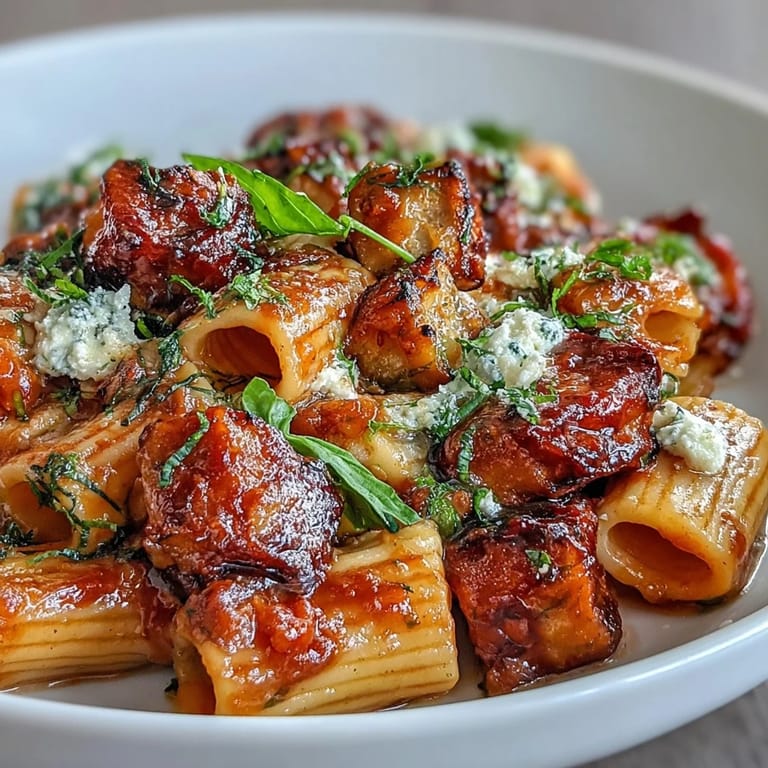
 The first time I understood this dish was when I stopped thinking of the eggplant as a supporting ingredient and realized it was actually the star. My perspective shifted from making pasta with eggplant to making a celebration of eggplant that happened to involve pasta, and somehow that small mental adjustment made me cook it better. Food like this rewards that kind of attention and respect.
Why Eggplant Matters More Than You Think
Most people's experience with eggplant comes from dishes where it's been breaded or fried until it barely tastes like itself anymore. But roasting it with nothing but olive oil and salt strips away that intimidation and shows you what eggplant actually is—a vegetable with a naturally creamy texture and a subtle, almost sweet flavor when treated gently. In this dish, that roasted eggplant becomes the reason you're eating the meal, not just something mixed into it.
The Sauce Is Supposed to Be Simple
There's something in us that wants to complicate tomato sauce, to add cream or meat or complicated layering, but Sicilian cooking has always understood that sometimes the best sauce is just tomato, onion, garlic, and time. When you don't fight against that simplicity, when you actually let the tomatoes reduce and concentrate, you end up with something that tastes more like tomato than tomato itself. The basil you add at the end doesn't compete with this—it just makes it sing a little louder.
Making It Your Own Without Losing the Soul
This is a dish with a history and a specific identity, but it's also flexible in ways that matter. Your tomatoes might be more acidic than mine, so you might want to cook your sauce longer or add a tiny pinch of sugar—that's fine. You might prefer your eggplant a little softer or crispier, and adjusting the roasting time is the right call. The only thing I'd genuinely ask you not to mess with is leaving out the ricotta salata or skipping the basil, because those are the moments where this dish becomes unmistakably itself.
- If you can't find ricotta salata, aged Pecorino Romano or even good feta will give you that salty, sharp contrast the dish needs.
- Fresh basil is important, but if you're truly out of options, a small amount of good quality dried oregano can work in a pinch.
- Taste as you go and adjust salt before serving, because the cheese adds saltiness that you need to account for.
 Save to Pinterest
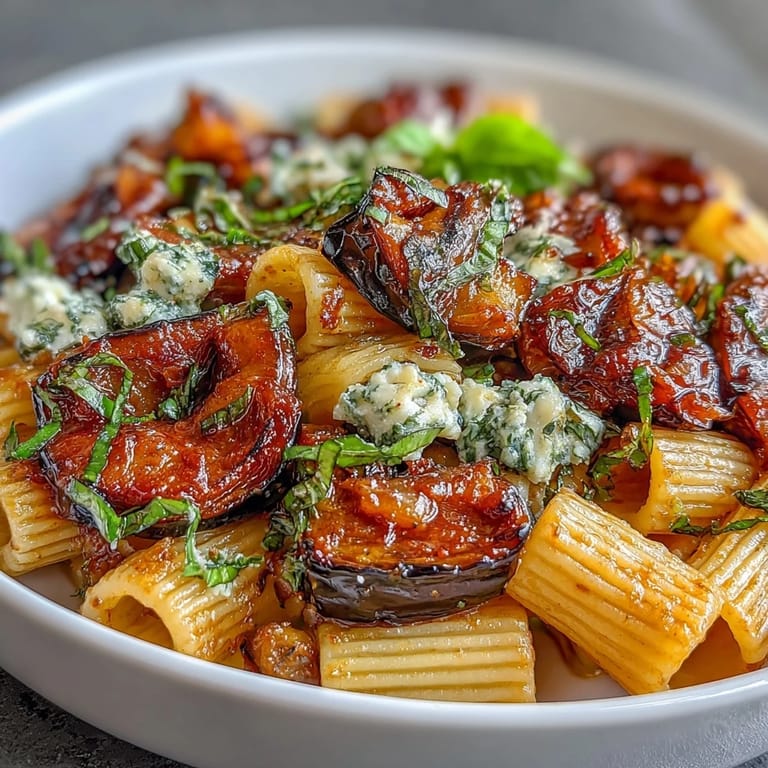
 This is the kind of meal that makes you feel like you've traveled somewhere just by cooking it, even if you never leave your kitchen. Serve it with a cold glass of something crisp and light, maybe a Sicilian white, and let yourself sit with it for a while.
Recipe FAQs
- → What does 'Norma' refer to in the dish name?
The dish is named after Vincenzo Bellini's opera 'Norma,' a beloved work by Sicilian composer. According to legend, Italian writer Nino Martoglio compared the creation to the opera itself, exclaiming 'This is a Norma!' meaning it was absolutely perfect.
- → Can I make this dish ahead of time?
The tomato sauce with roasted eggplant can be prepared up to two days in advance and stored in the refrigerator. Reheat gently before tossing with freshly cooked pasta for the best texture and flavor.
- → What cheese works best as a substitute for ricotta salata?
Pecorino Romano offers a similar salty profile and crumbles well. Feta provides a tangy alternative, though it's slightly creamier. For a vegetarian option, aged halloumi or grated Parmigiano-Reggiano can work.
- → Why should I roast the eggplant instead of frying it?
Roasting requires less oil than traditional frying while still achieving that caramelized exterior and tender interior. The oven method also allows you to prepare the sauce simultaneously, making the overall process more efficient.
- → How do I prevent the eggplant from becoming bitter?
Choose younger, smaller eggplants with fewer seeds. Some cooks salt the cubed eggplant for 30 minutes before roasting to draw out moisture and bitterness, then pat dry before tossing with olive oil.
- → What pasta shape pairs best with this sauce?
Rigatoni's ridges and wide tubes capture the chunky sauce beautifully. Penne is another excellent choice. The sauce also works well with shorter tubular shapes like ziti or gemelli.