 Save to Pinterest
 I used to think carrots were only meant for snacking until a rainstorm trapped me in a tiny cafe. The soup they served was so bright and spicy that I spent the rest of the week trying to recreate that exact warmth. My kitchen smelled like a ginger garden for days as I tested different ratios. It turns out that a little bit of heat from the root makes the sweet carrots taste almost like sunshine.
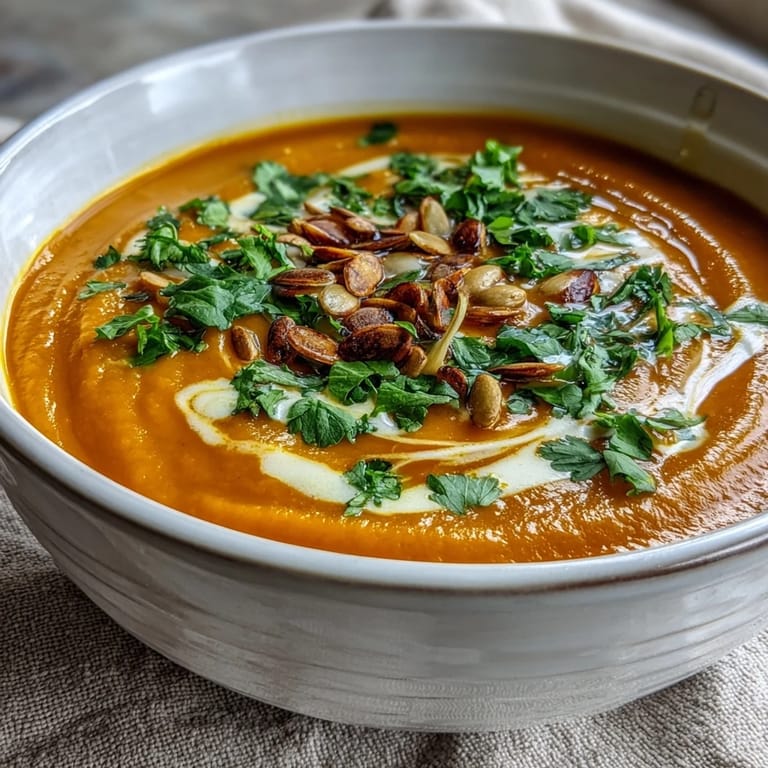
One chilly October afternoon I made a giant batch for my neighbor who was recovering from a cold. We sat on the porch wrapped in blankets and watched the leaves fall while the steam rose from our mugs. It was the first time I realized that soup is basically a hug you can eat. The way the coconut milk swirled into the orange base looked like a tiny storm in a cup.
Ingredients
- Olive oil: This acts as the silky base that helps the onions soften without burning.
- Onion: A medium yellow one works best because it provides a foundational sweetness that anchors the sharper ginger.
- Garlic: These little cloves add a savory depth that prevents the soup from tasting too much like a dessert.
- Carrots: Fresh and firm ones give the brightest color and the most natural sugar.
- Fresh ginger: Grating it fresh is non negotiable because the bottled stuff lacks that specific spicy kick.
- Vegetable broth: I prefer a low sodium version so I can control the salt levels at the very end.
- Coconut milk: This adds a luxurious creaminess that balances the heat while keeping everything plant based.
- Sea salt: It wakes up all the other flavors and makes the carrot taste more intense.
- Black pepper: A tiny bit adds a second layer of warmth that lingers on the tongue.
- Lemon juice: This bright acid cuts through the richness and makes the whole dish pop.
Tired of Takeout? 🥡
Get 10 meals you can make faster than delivery arrives. Seriously.
One email. No spam. Unsubscribe anytime.
Instructions
- Softening the aromatics:
- Gently sizzle the onions in oil until they look like little pieces of stained glass. This creates a sweet base for the rest of the flavors.
- Waking up the spices:
- Toss in the garlic and ginger for just a minute until the air smells spicy and sweet. Be careful not to let the garlic brown or it will turn bitter.
- Simmering the base:
- Let the carrots soak in the broth under a lid until they are soft enough to crush with a spoon. This usually takes about twenty to twenty five minutes of gentle bubbling.
- Blending to silk:
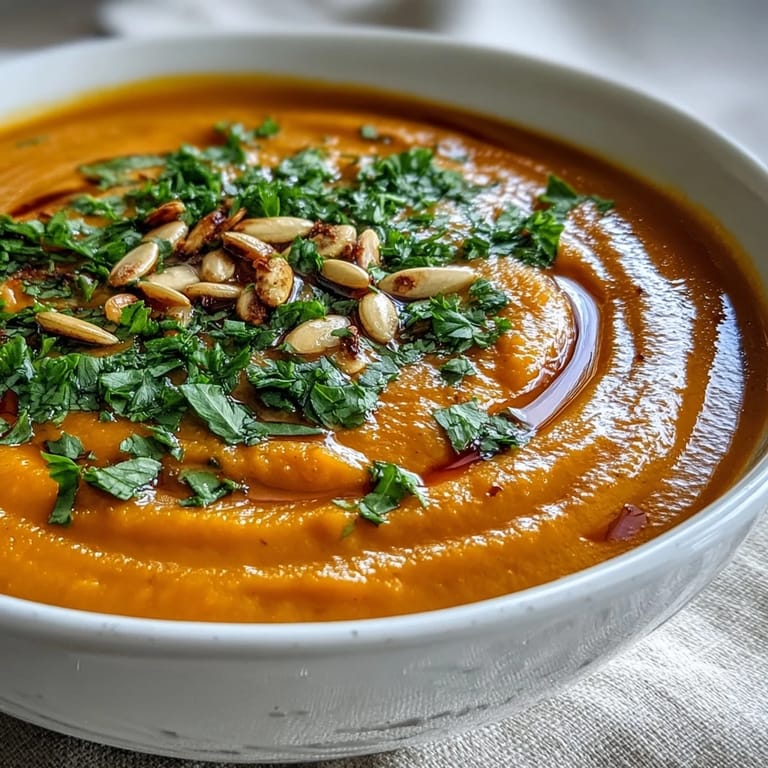
- Use your immersion blender to turn the chunky mixture into a perfectly smooth and vibrant orange velvet. Work in circles to make sure no stubborn carrot chunks remain at the bottom.
- The final finish:
- Stir in the creamy coconut milk and lemon juice while the soup is still steaming hot. This is the moment when the colors really start to glow.
 Save to Pinterest
 There is something meditative about watching a blender turn rough vegetables into a smooth orange sea. I remember the silence of my kitchen being broken only by the whir of the blades and the satisfying aroma. It felt like I was crafting something truly nourishing out of the simplest things in my pantry.
The Secret to Smoothness
Getting that professional texture depends entirely on how long you let the carrots simmer. If they have even the slightest crunch left the soup will feel grainy rather than silky. I always test a piece by pressing it against the side of the pot with a wooden spoon. It should give way instantly without any resistance at all.
Playing with Garnishes
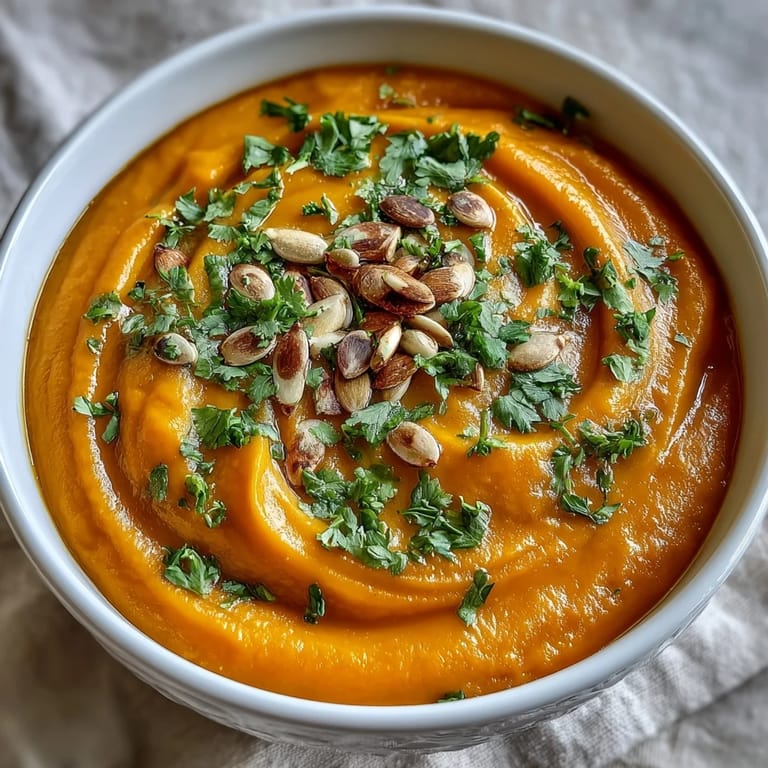
While the soup is beautiful on its own I love adding textures to the top for a bit of contrast. A drizzle of extra coconut milk creates a lovely white swirl against the orange. I often reach for toasted pumpkin seeds if I want a satisfying crunch in every bite. It turns a light lunch into a more substantial meal that keeps me full for hours.
Storage and Reheating
This is one of those rare dishes that actually tastes better the next day after the ginger has mellowed. I like to keep a jar in the fridge for those busy afternoons when I need a quick hit of energy. You can even freeze portions in individual containers for a fast meal later in the month.
- Make sure the soup is completely cool before you snap the lid on the container.
- Reheat it slowly on the stove rather than the microwave to keep the coconut milk from separating.
- Add a fresh squeeze of lemon just before eating to revive the dormant flavors.
 Save to Pinterest
 This soup has a way of making the world feel a little bit brighter with every spoonful. I hope it brings as much warmth to your kitchen as it does to mine.
Recipe FAQs
- → Can I make this soup ahead of time?
Absolutely. This soup actually develops deeper flavor when made ahead and stored in the refrigerator for 2-3 days. The flavors meld together beautifully overnight. Reheat gently on the stove, adding a splash of broth or water if needed to adjust consistency.
- → Is coconut milk necessary for the texture?
Not at all. While coconut milk adds lovely richness and creaminess, the soup achieves a velvety texture purely from the blended carrots. You can substitute with heavy cream, omit entirely for a lighter version, or blend in a cooked potato for extra body without dairy.
- → Can I freeze this soup?
Yes, it freezes exceptionally well. Cool completely before transferring to airtight containers or freezer bags. It will keep for up to 3 months. Thaw overnight in the refrigerator and reheat slowly on the stove, whisking to restore smoothness. The texture remains nearly identical to fresh.
- → What other spices work well in this soup?
Ground cumin, coriander, or turmeric pair beautifully with the carrot-ginger base. A pinch of cayenne adds extra heat if desired. Fresh curry leaves or a cinnamon stick during simmering introduce warm aromatic notes. Start with small amounts and adjust to taste.
- → How do I adjust the consistency?
For a thicker soup, simmer longer to reduce liquid or add more carrots. To thin, add more broth or water until reaching desired consistency. The final blend dramatically affects thickness - blend thoroughly for silky smooth results, or pulse briefly for a chunkier texture with more body.