 Save to Pinterest
 My neighbor handed me a bag of Brussels sprouts from her garden one October afternoon, and I had no plan for them. I'd always thought they were bland, but something about the cool air and the way she described roasting them with butter made me curious. I decided to try something creamier instead, rifling through my fridge until I found cream cheese and a jar of Dijon. The sauce came together almost by accident, and the first bite made me wonder why I'd avoided these little green globes for so long.
I served this to my brother, who'd spent years claiming he hated Brussels sprouts. He scraped his plate clean and asked for the recipe before he left. That night, I realized how much a good sauce can change someone's mind about a vegetable. It felt like a small victory in the kitchen, the kind that makes you want to cook for people more often.
Ingredients
- Brussels sprouts (600 g): Trim the ends and peel any bruised outer leaves; fresh ones cook more evenly and taste sweeter.
- Cream cheese (150 g): This is what makes the sauce silky and thick, melting into the mustard without separating.
- Dijon mustard (2 tablespoons): Adds sharpness and depth; don't skip it or the sauce will taste flat.
- Vegetable broth (150 ml): Loosens the sauce just enough to coat every sprout without pooling at the bottom.
- Butter (2 tablespoons): Use real butter for the best flavor when sautéing the onion and garlic.
- Onion (1 small, finely chopped): Gives the sauce a savory backbone that cream cheese alone can't provide.
- Garlic (1 clove, minced): One clove is plenty; any more and it can overpower the delicate mustard flavor.
- Lemon juice (1 teaspoon): Brightens the whole dish at the end, cutting through the richness perfectly.
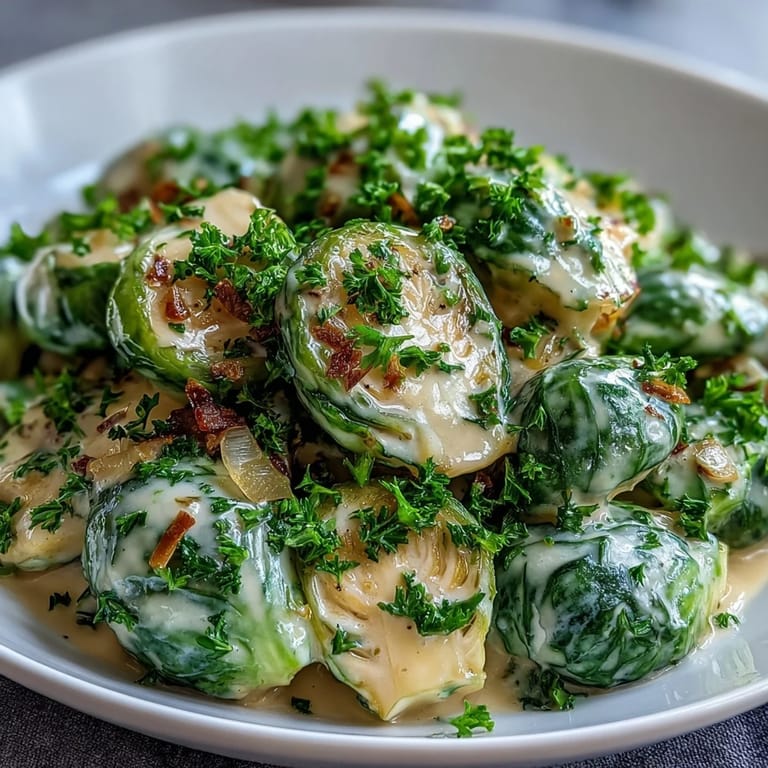
- Fresh parsley: A handful of chopped parsley on top adds color and a fresh herbal note.
- Salt and pepper: Taste as you go; Brussels sprouts need more seasoning than you think.
Tired of Takeout? 🥡
Get 10 meals you can make faster than delivery arrives. Seriously.
One email. No spam. Unsubscribe anytime.
Instructions
- Boil the Brussels sprouts:
- Bring a large pot of salted water to a rolling boil, then add the trimmed sprouts and cook for 5 to 7 minutes until they're tender but still have a bit of bite. Drain them well so they don't water down your sauce later.
- Sauté the aromatics:
- Melt the butter in a large skillet over medium heat, add the chopped onion, and cook for 3 to 4 minutes until it turns translucent and smells sweet. Toss in the garlic and let it sizzle for just a minute until fragrant.
- Build the sauce:
- Lower the heat and stir in the cream cheese and Dijon mustard, mixing until the mixture is smooth and no lumps remain. Slowly pour in the vegetable broth while stirring constantly, watching the sauce turn creamy and glossy.
- Season and finish:
- Add salt, pepper, and lemon juice, tasting as you go to get the balance just right. The lemon should wake up the flavors without making the sauce taste sour.
- Combine and serve:
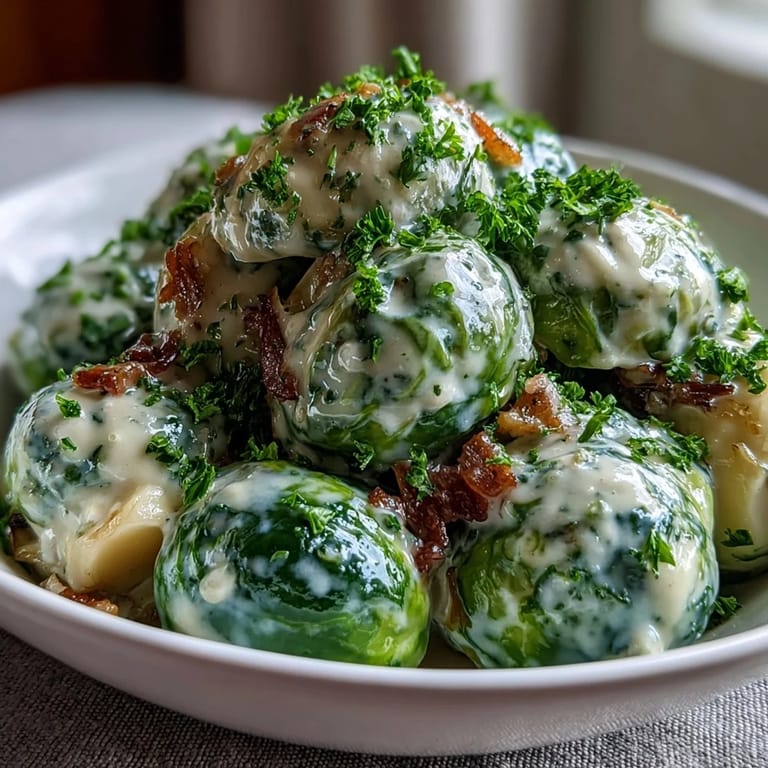
- Add the drained Brussels sprouts to the skillet and toss gently to coat each one in the sauce, heating everything through for 2 to 3 minutes. Transfer to a serving dish and scatter fresh parsley over the top before bringing it to the table.
 Save to Pinterest
 The first time I brought this to a dinner party, someone asked if it was a German recipe their grandmother used to make. I had no idea, but it felt like a compliment. That night, the dish became more than just a side—it was a conversation starter, a bridge between strangers who bonded over creamy vegetables and childhood memories.
Serving Suggestions
This pairs beautifully with roasted chicken, pork chops, or a simple pan-seared steak, but I've also eaten it as a main with crusty bread to soak up the extra sauce. If you're serving it for a holiday meal, it holds up well on a buffet table and looks elegant enough to impress. I once served it alongside mashed potatoes and realized the two creaminess levels competed, so now I pair it with something lighter like roasted carrots or a crisp green salad.
Storage and Reheating
Leftovers keep in an airtight container in the fridge for up to three days, and the flavors actually deepen overnight as the sprouts soak up more of the sauce. Reheat gently in a skillet over low heat, adding a splash of broth or water if the sauce has thickened too much. I've also microwaved individual portions, though the texture is better when you reheat on the stovetop and give everything a good stir.
Variations and Swaps
If you want a little heat, stir in a pinch of cayenne pepper or a few red pepper flakes when you add the garlic. You can swap the cream cheese for a tangy goat cheese, though the texture will be slightly grainier. For a dairy-free version, use cashew cream and vegan butter, but add an extra squeeze of lemon to mimic the tang of cream cheese.
- Try adding crispy bacon bits on top for a smoky, salty contrast.
- Swap Dijon for whole grain mustard if you like a little more texture and bite.
- Toss in toasted walnuts or pecans for crunch and a nutty depth.
 Save to Pinterest
 This dish has become one of those recipes I make when I want to feel like I'm taking care of someone, including myself. There's something about the way the sauce clings to each sprout that feels generous and warm, like a hug on a plate.
Recipe FAQs
- → Can I use frozen Brussels sprouts instead of fresh?
Frozen Brussels sprouts can work, though fresh ones yield better texture. If using frozen, thaw and pat them dry before adding to the sauce to avoid watering it down. Cooking time may be slightly shorter since frozen sprouts are already partially cooked during blanching.
- → What can I substitute for cream cheese?
Greek yogurt or sour cream can replace cream cheese for a lighter version, though the sauce will be thinner. For a dairy-free option, try cashew cream or coconut cream—both create richness but will subtly alter the flavor profile.
- → How do I prevent the sauce from curdling?
Keep the heat low when adding cream cheese to the skillet. High heat can cause dairy to separate. Stir continuously and gradually incorporate the vegetable broth to maintain a smooth, emulsified sauce. If curdling occurs, whisking vigorously usually brings it back together.
- → Can I make this dish ahead of time?
Absolutely. Prepare the sprouts and sauce separately up to a day in advance. Store them in airtight containers in the refrigerator. Reheat gently on the stove, adding a splash of broth or water if the sauce has thickened too much. Finish with fresh parsley before serving.
- → What herbs or spices can I add for variation?
Fresh thyme or rosemary complements the mustard beautifully. A pinch of nutmeg adds warmth, while cayenne pepper introduces heat. For fresh brightness, try adding chopped chives or tarragon along with the parsley garnish.
- → Is this dish gluten-free?
The ingredients are naturally gluten-free, but always check your Dijon mustard and vegetable broth labels, as some brands include gluten-based additives or thickeners. Certified gluten-free products ensure the dish remains safe for those with sensitivities.