 Save to Pinterest
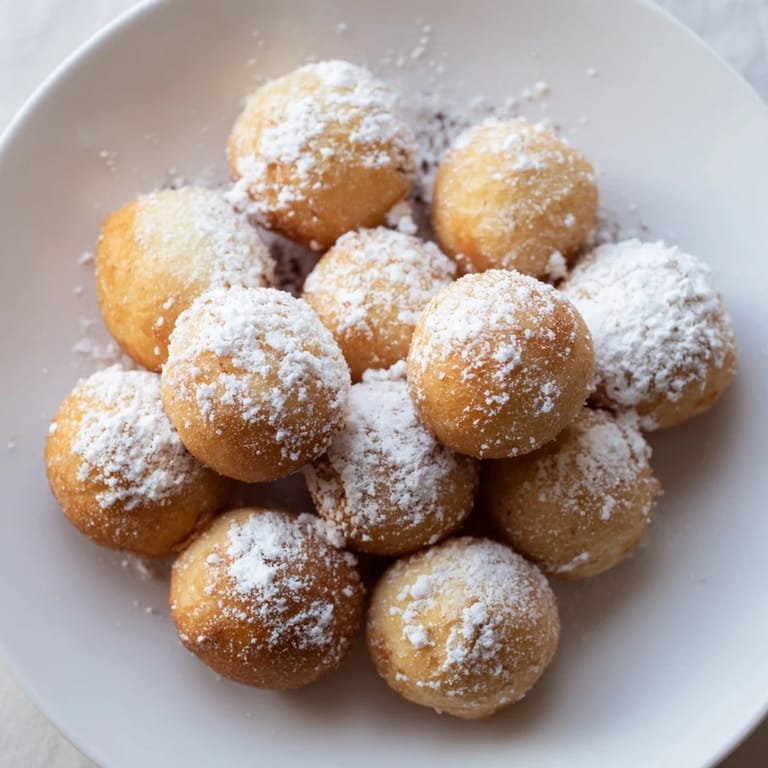
 My neighbor Marcus showed up one Saturday morning with a box of fresh doughnut holes from a local bakery, still warm and dusted in cinnamon sugar. I bit into one and the whole thing collapsed into this perfect blend of tender crumb and crispy exterior—and I realized I had no idea you could make these at home. That afternoon, I decided to figure it out, and after a few batches, I cracked the code: the secret was in the nutmeg and knowing exactly when to pull them from the oil. Now I make them whenever I want that feeling again.
I made these for my daughter's school bake sale last spring, and watching kids' faces light up when they bit into a warm one made me understand why people love doughnut shops so much. She asked if we could make them every week after that, and for a while we did, until the ritual shifted to something else. But I kept the recipe close because some memories taste like these—simple, sweet, and gone too fast.
Ingredients
- All-purpose flour (2 cups): The foundation of tender dough; don't sift it unless you want a tougher result.
- Granulated sugar (1/4 cup): Keeps the dough slightly sweet without making it heavy or cake-like.
- Baking powder (1 1/2 tsp): This is what gives them lift and that pillowy middle.
- Salt (1/2 tsp): Brightens all the flavors you can't quite name.
- Ground nutmeg (1/2 tsp): The secret ingredient that makes people ask what it is; don't skip it.
- Whole milk (2/3 cup): Adds richness and tenderness to the crumb.
- Large eggs (2): Bind everything and help them puff up in the oil.
- Unsalted butter, melted (2 tbsp): Keeps them from being greasy while adding subtle richness.
- Vanilla extract (1 tsp): A quiet flavor that rounds out the spice.
- Vegetable oil for frying (4 cups): Choose a neutral oil with a high smoke point; I use canola.
- Powdered sugar or cinnamon sugar for coating: Applied while warm so it sticks and melts into the crevices.
Tired of Takeout? 🥡
Get 10 meals you can make faster than delivery arrives. Seriously.
One email. No spam. Unsubscribe anytime.
Instructions
- Mix the dry team:
- In a large bowl, whisk together flour, sugar, baking powder, salt, and nutmeg until there are no lumps hiding at the bottom. This takes maybe two minutes and makes everything that follows easier.
- Combine the wet side:
- In another bowl, whisk milk, eggs, melted butter, and vanilla until smooth and cohesive. Temperature matters less here, but cold eggs mixing into warm butter is fine.
- Bring them together gently:
- Pour the wet ingredients into the dry and stir just until combined—about 20 seconds of mixing. Overmixing activates gluten and toughens the dough, which is the opposite of what you want.
- Heat the oil to exactly right:
- In a deep pot or Dutch oven, warm vegetable oil to 350°F (175°C). Use a thermometer; eyeballing leads to outside-cooked-inside-raw or grease-soaked disappointment.
- Portion and fry in batches:
- Using a small cookie scoop or tablespoon, drop walnut-sized balls of dough into the oil, working in batches so they have room to move and brown evenly. Crowding the pan cools the oil and steams them instead of frying them.
- Watch for the turn:
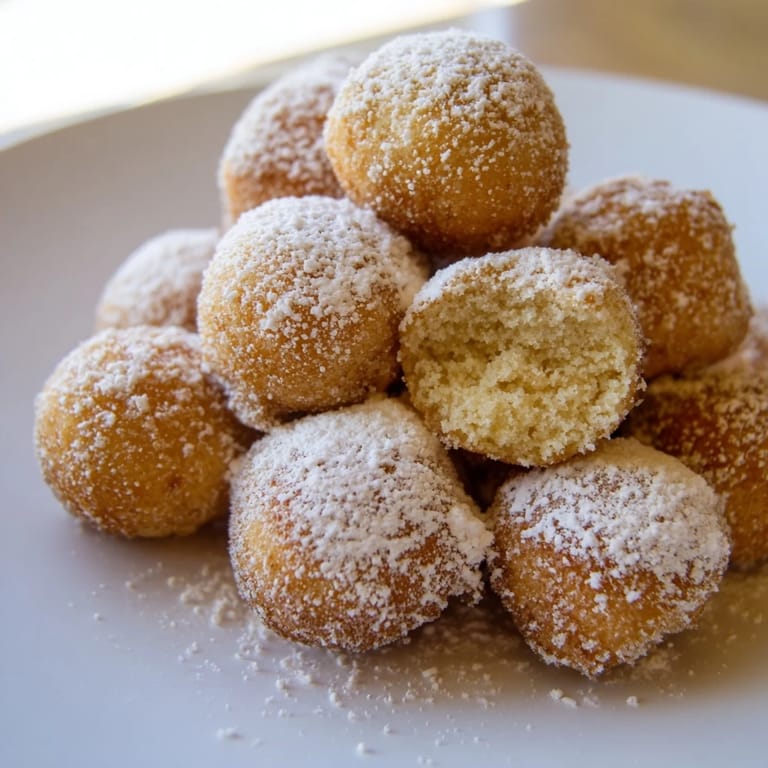
- Let each batch cook for 1 to 1.5 minutes, then use a fork or chopstick to gently flip them and cook another 1 to 1.5 minutes until they're all over golden brown. Timing varies based on size, so trust your eyes.
- Drain and cool just slightly:
- Remove with a slotted spoon and rest them on paper towels for a minute or so to shed excess oil. They're still cooking a little on the paper towel, so don't leave them there too long.
- Coat while the heat is still alive:
- While still warm, toss them in powdered sugar, or in a bowl of granulated sugar mixed with cinnamon. The warmth makes the coating stick and melts into a light glaze.
- Eat them now:
- Best enjoyed warm or at room temperature within a few hours of frying, when the outside is still a little crisp and the inside is still soft.
 Save to Pinterest
 There's something about standing over a pot of bubbling oil, pulling out these golden spheres one after another, that pulls me into a kind of calm focus. It's hypnotic and meditative in a way that makes the kitchen feel like the only place that matters. That peace is why I keep making them.
Troubleshooting Common Moments
If your doughnut holes are too dense, you mixed the batter too much or didn't use enough baking powder. If they're greasy, the oil wasn't hot enough or you crowded the pan. If they're browning too fast but the inside is still raw, lower the temperature slightly and fry a little longer. Every mistake teaches you what to listen for and watch for next time.
Variations and Filling Ideas
Once you nail the basic recipe, doughnut holes become a canvas. You can infuse the dough with a pinch of cardamom or almond extract for depth. After frying and draining, you can slit them gently and fill with jam, chocolate ganache, or even a touch of pastry cream. The texture stays perfect as long as you don't fill them too far in advance.
- Cardamom dough is subtle and sophisticated if you want to feel fancy.
- Jam-filled versions are best filled while still warm so the fillings stays spreadable.
- Chocolate or glaze dipped halfway gives a bakery feel without extra effort.
Storage and Keeping Them Fresh
Doughnut holes are a now-food, best within hours of frying when the exterior has that slight snap. If you do have leftovers, store them in an airtight container at room temperature for up to a day—they soften as they sit but don't go bad. You can gently reheat them in a 300°F oven for a few minutes if you want to revive that crispness.
 Save to Pinterest
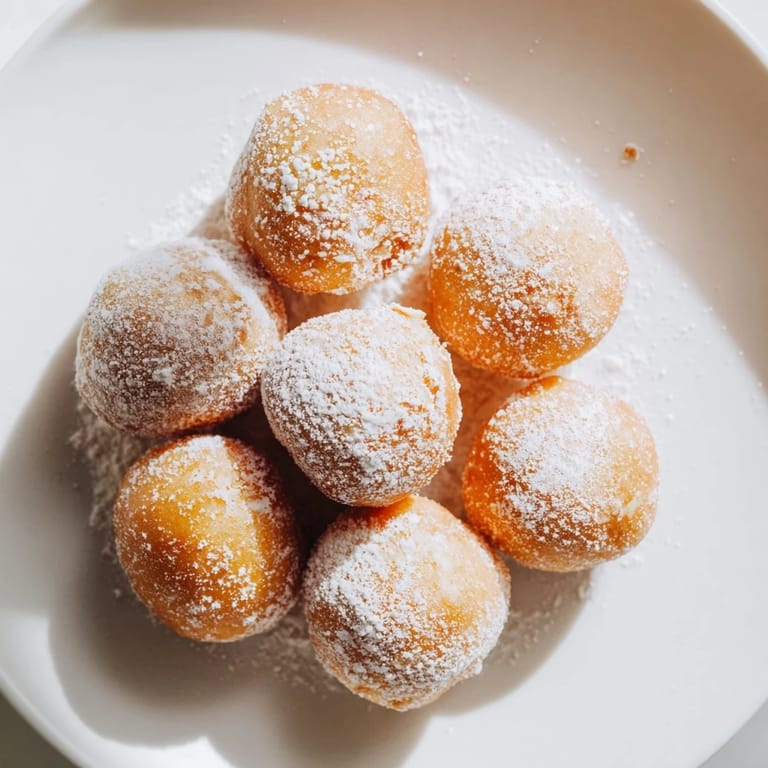
 These little fried dough balls have a way of turning an ordinary afternoon into something worth remembering. Make them, share them, and watch people's faces light up the way mine did when I first bit into one.
Recipe FAQs
- → What is the best oil for frying dough balls?
Vegetable oil with a high smoke point is ideal to achieve a crisp golden crust without burning.
- → How do I ensure the dough balls cook evenly?
Fry in small batches and turn occasionally to brown all sides uniformly while keeping the centers tender.
- → Can the dough be flavored differently?
Yes, adding spices like cardamom or vanilla extract enhances the flavor while keeping the classic texture.
- → What coatings work well besides powdered sugar?
A simple cinnamon-sugar blend adds a warm, sweet touch complementing the crisp dough.
- → How should leftover fried dough balls be stored?
Store in an airtight container for up to one day to maintain freshness, preferably at room temperature.