 Save to Pinterest
 There's something about the smell of lemon zest hitting your cutting board that makes you feel like you're about to do something right in the kitchen. I was standing at my counter on a gray Tuesday afternoon, squeezing a lemon for tea, when the juice splashed onto my hand and I thought: these should be cookies. Not fancy ones, just soft buttery ones that taste like sunshine and make your mouth pucker a little. By evening, I'd baked my first batch, and they disappeared so fast I had to make another round just to taste one myself.
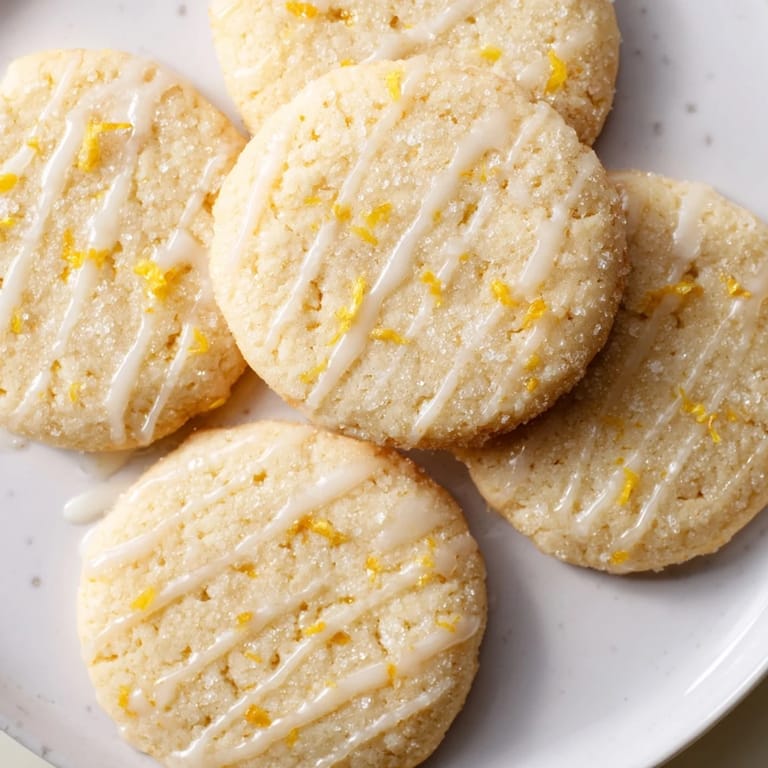
My mom texted me a photo once of these cookies arranged on a white plate with a cup of coffee, asking if I remembered making them for her book club. I didn't at first, then it hit me—I had dropped off a batch one Thursday morning, still warm, because she mentioned offhand that her friends loved anything lemony. She told me later they were gone before the meeting even started, everyone sneaking them from the kitchen when they thought no one was looking.
Ingredients
- All-purpose flour (2 1/4 cups): This is your foundation, so don't skip the measuring—spoon and level, or use a scale if you have one, because too much flour and your cookies turn dense and chalky.
- Baking soda and salt (1/2 teaspoon and 1/4 teaspoon): They seem tiny but they're the backbone, giving these cookies their gentle rise and making the lemon sing.
- Unsalted butter (1 cup), room temperature: Cold butter won't cream properly, so let it sit on the counter for a bit—this is where the fluff comes from, and fluff is everything.
- Granulated sugar (1 cup): This creams with the butter to trap air, which keeps these cookies soft instead of crispy.
- Large egg: Just one, but it binds everything and adds moisture that keeps them tender the next day.
- Fresh lemon juice (2 tablespoons) and zest (2 teaspoons): This is where you taste the difference between a good cookie and a forgettable one—use fresh lemons, never bottled juice, and zest the fruit before you juice it.
- Vanilla extract (1 teaspoon): A small amount that rounds out the sharpness of the lemon and makes the flavor deeper.
- Granulated sugar for rolling (1/4 cup): This creates that sparkly crust that catches light and gives your teeth something satisfying to crunch against.
- Powdered sugar (1 cup, sifted): For the glaze, and sifting matters because lumps don't dissolve smoothly in lemon juice.
- Fresh lemon juice for glaze (2–3 tablespoons) and zest (1 teaspoon): More fresh lemon, because you've committed to the bit at this point.
Tired of Takeout? 🥡
Get 10 meals you can make faster than delivery arrives. Seriously.
One email. No spam. Unsubscribe anytime.
Instructions
- Get your oven ready and prep your pans:
- Heat your oven to 350°F and line two baking sheets with parchment paper so nothing sticks. This takes two minutes but saves you from scraped cookie bottoms.
- Mix the dry team:
- In a medium bowl, whisk flour, baking soda, and salt until they're evenly distributed. Don't skip the whisking—it breaks up any clumps and distributes the leavening evenly.
- Cream butter and sugar into clouds:
- Put your room-temperature butter and sugar in a large bowl and beat with an electric mixer for 2 to 3 minutes until it's pale, fluffy, and almost doubled in volume. This is where the magic happens—you're trapping air that makes cookies tender.
- Add the egg and bright flavors:
- Beat in the egg, then the lemon juice, lemon zest, and vanilla extract until everything looks combined and smooth. The mixture will look slightly curdled at first, but keep beating and it'll come together.
- Fold in the flour gently:
- Gradually mix in your dry ingredients on low speed until just combined. Stop as soon as you don't see streaks of flour—overmixing develops gluten and makes cookies tough.
- Roll in sparkly sugar:
- Scoop tablespoon-sized portions of dough and roll them between your palms into balls. Roll each one in the granulated sugar to coat, and yes, your hands will get sticky and sugary—that's part of the process.
- Space them out on the pan:
- Place the sugar-coated balls about 2 inches apart on your prepared baking sheets. They'll spread a little as they bake, so give them room to breathe.
- Bake with intention:
- Bake for 10 to 12 minutes, watching for the moment when the edges are set but the tops still look slightly underbaked—they should be just dry to the touch. If you bake them until they look fully golden, they'll be crispy, which is not the goal here.
- Cool with patience:
- Let them sit on the hot pan for 5 minutes so they firm up just enough to move, then transfer them to a wire rack to cool completely. This matters because moving them too early means they'll crack.
- Make the glaze and finish:
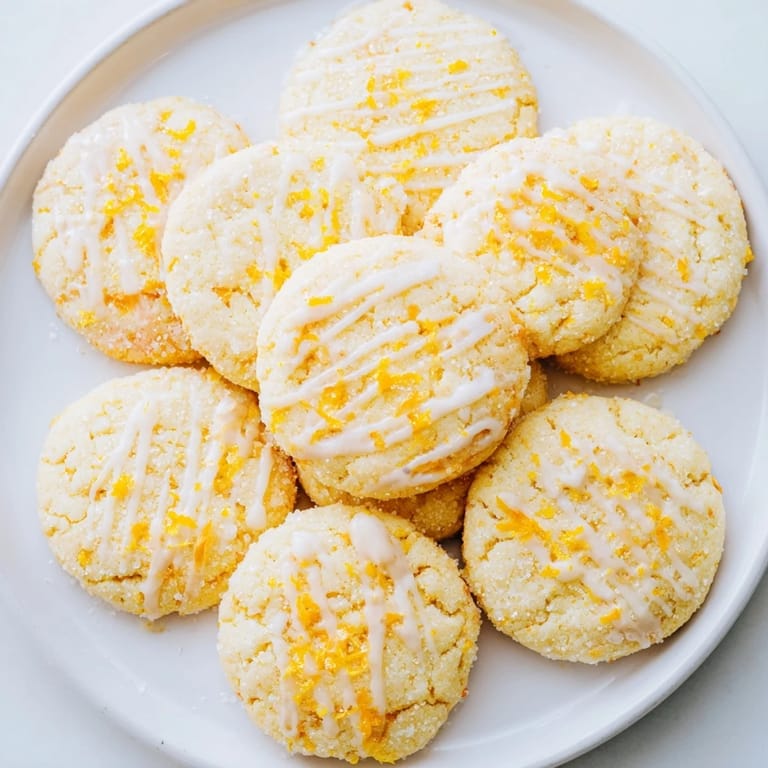
- Whisk powdered sugar, lemon juice, and lemon zest in a small bowl until smooth and pourable. Drizzle it over the cooled cookies and let it set for a few minutes so it doesn't drip off when you touch them.
 Save to Pinterest
 I learned the hardest lesson about these cookies at a dinner party when I overbaked a batch trying to make them look more impressive. They came out golden and beautiful, but one bite and I knew I'd messed up—they were snappy instead of soft. My friend was kind about it, but I could tell, and I've never made that mistake again because sometimes our biggest cooking lessons come from small failures served on a plate in front of people we care about.
Why Fresh Lemon Matters
The difference between bottled lemon juice and fresh is the difference between something tasting like lemon and something that tastes alive. Bottled juice sits in bottles and loses its brightness, becoming flat and chemical-tasting. When you squeeze a fresh lemon, you're getting the oil from the zest and the juice at its peak, and your cookies taste noticeably brighter and more real. I learned this the hard way by making a batch with bottled juice once, and even my sister, who will eat anything, asked why they tasted flat.
The Art of Not Overbaking
This is the single most important thing to master with these cookies, and it's harder than it sounds because they look so pretty when they're golden that you want to leave them in longer. The trick is to pull them out when the edges look set and the tops look dry but not browned, then trust that they'll continue cooking on the hot pan for those 5 minutes while they cool. If you wait until they look fully baked inside the oven, you've already gone too far. I've timed this a hundred times, and 10 to 12 minutes is the sweet spot for perfectly soft cookies.
Variations and Pairings
Once you've mastered the lemon version, you can play with other citrus—lime gives them a tropical edge, and orange makes them feel almost cakey and warm. Some people add a few drops of lemon extract to intensify the flavor, which works beautifully if you love brightness, but it can be overpowering if you're not careful. These cookies pair unexpectedly well with Earl Grey tea or a glass of chilled white wine, and they're just as good plain with an afternoon coffee as they are dressed up for a dinner party.
- Try swapping the lemon for lime or orange zest for a completely different personality.
- A few drops of lemon extract takes the flavor even further, but use sparingly or it becomes artificial tasting.
- These keep for 4 days in an airtight container, and the glaze actually sets and hardens a bit, which is lovely.
 Save to Pinterest
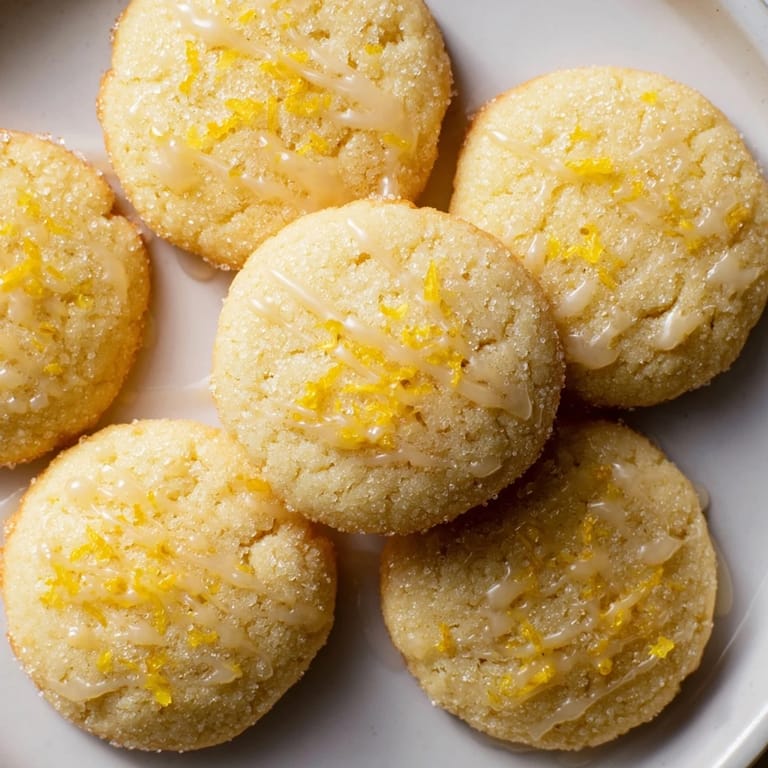
 These cookies have a way of becoming a favorite without demanding much from you, which is the mark of a truly good recipe. They're simple enough that you can make them on a Tuesday afternoon, but special enough to feel like you did something worthwhile in your kitchen.
Recipe FAQs
- → How do I get the cookies soft and tender?
Using room temperature butter and avoiding overmixing the dough helps maintain a soft, tender texture.
- → What enhances the lemon flavor in these cookies?
Fresh lemon juice and finely grated lemon zest are key to achieving a bright, natural citrus taste.
- → Can I substitute the granulated sugar used for rolling?
Sparking sugar is recommended for texture, but sanding sugar or fine white sugar can be used as alternatives.
- → How thick should I make the dough balls before baking?
Roll tablespoon-sized portions into balls and space them about 2 inches apart to allow for slight spreading.
- → What is the purpose of the citrus glaze?
The glaze adds a tangy sweetness that enhances the lemon notes and provides a glossy finish.