 Save to Pinterest
 There's something about summer evenings that makes you crave food that feels light but genuinely satisfying, and this bowl became my answer to that craving. I was standing in my kitchen on a particularly humid afternoon, staring at chicken breasts and an embarrassing amount of vegetables from the farmers market, when I realized I had all the pieces for something that could be both quick and memorable. The lemon vinaigrette came together almost by accident—I was balancing flavors on my tongue, adjusting the acid and oil until it sang, and suddenly lunch felt like something worth celebrating.
I made this for a friend who'd just started a new diet, and watching her face light up when she realized healthy food could actually taste like this made the whole thing worthwhile. She asked for the recipe immediately, and I remember thinking how rare it is to feel genuinely excited about what's on your plate—that's when I knew this bowl had something special.
Ingredients
- Extra-virgin olive oil (1/4 cup for vinaigrette, 2 tablespoons for chicken): Use the good stuff for the dressing where you'll taste it directly, and save a decent but less precious oil for the marinade.
- Fresh lemon juice and zest (2 tablespoons juice, 1 teaspoon zest): This is the backbone of everything—fresh lemons make the vinaigrette come alive in a way bottled juice simply cannot.
- Dijon mustard (1 teaspoon): The secret player that helps emulsify the vinaigrette and adds a subtle complexity without screaming mustard.
- Garlic clove, minced (1): Raw garlic in the dressing gives you a gentle bite that doesn't overpower the delicate lemon notes.
- Honey (1/2 teaspoon): Just enough to round out the acidity and add a whisper of natural sweetness that balances everything.
- Sea salt and black pepper: Season aggressively here—the dressing needs to taste a little bold before it dresses the vegetables.
- Boneless, skinless chicken breasts (4, about 1.5 lbs): Pound them to an even thickness if they're particularly thick, so they cook uniformly and stay juicy.
- Dried oregano and smoked paprika (1 teaspoon each): These spices give the chicken a subtle depth without requiring a complicated marinade.
- Cooked quinoa or brown rice (1 cup): The foundation that keeps you full—cook it while the chicken grills to save time.
- Cherry tomatoes, cucumber, bell pepper, baby spinach, red onion (1 cup each or sliced as noted): Choose vegetables at their peak ripeness; they're the stars here, and a tired tomato will show.
- Feta cheese (1/4 cup crumbled, optional): The salty, tangy finish that makes people ask what makes this taste so good.
- Fresh parsley (2 tablespoons chopped): A last-minute brightness that ties everything together visually and flavor-wise.
Tired of Takeout? 🥡
Get 10 meals you can make faster than delivery arrives. Seriously.
One email. No spam. Unsubscribe anytime.
Instructions
- Make the lemon vinaigrette first:
- Whisk together the olive oil, fresh lemon juice, zest, Dijon mustard, minced garlic, honey, salt, and pepper in a small bowl until it looks creamy and emulsified. Taste it and adjust—it should make your mouth water a little, not pucker.
- Season and marinate the chicken:
- Combine the olive oil, oregano, smoked paprika, salt, and pepper in a large bowl, add your chicken breasts, and toss to coat every surface. Let them sit for 15 minutes while you get your grill ready; this gives the spices time to cling to the meat.
- Get your grill hot:
- Heat your grill or grill pan to medium-high until it's truly hot—you want to hear that satisfying sizzle when the chicken hits the grates. This creates those beautiful char marks that add real flavor.
- Grill the chicken with confidence:
- Place the chicken on the grill and resist the urge to move it around; let it sit for 5 to 6 minutes per side until you see golden-brown grill marks and the internal temperature reaches 165°F (74°C). Once cooked, let it rest for 5 minutes before slicing—this keeps the juices inside the meat where they belong.
- Prep the grains and vegetables while chicken cooks:
- If your quinoa or rice isn't already cooked, start it now so it finishes right around the same time. While that's going, slice your vegetables so they're ready to assemble.
- Build your bowls:
- Divide the warm grain among four bowls, then layer spinach or greens on top followed by all your colorful vegetables. The warmth of the grain will slightly soften the greens without wilting them completely.
- Add the chicken and dressing:
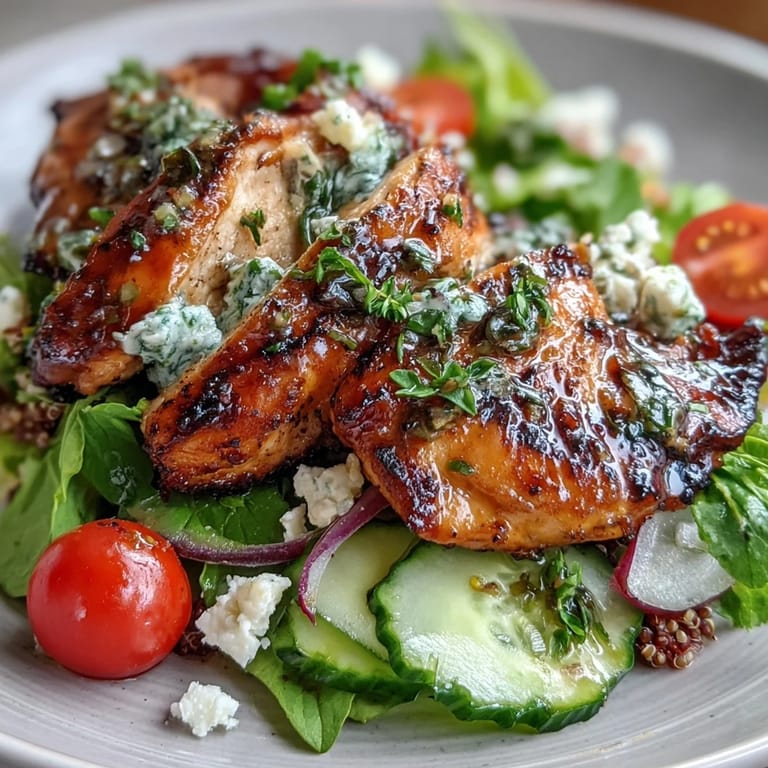
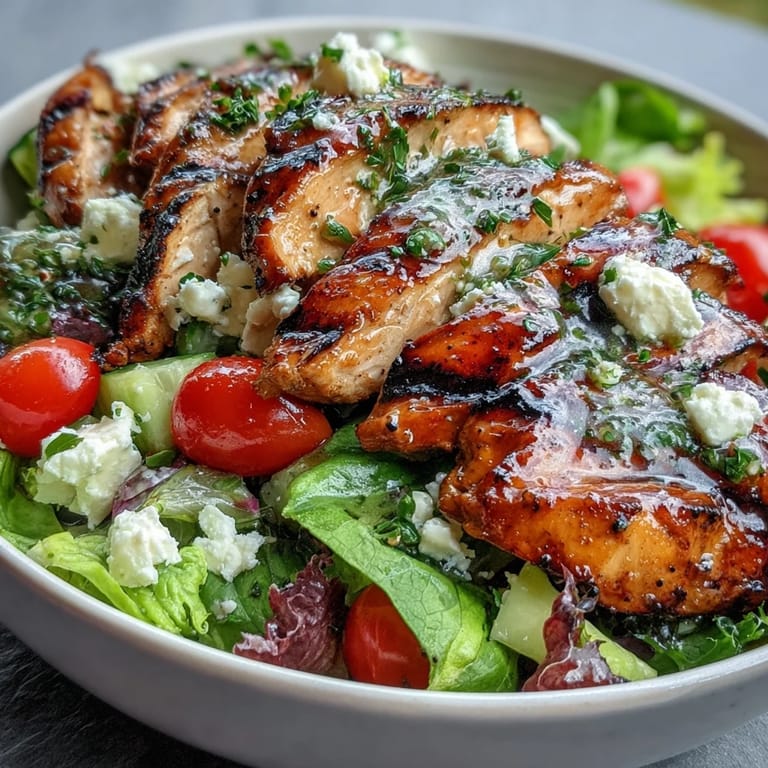
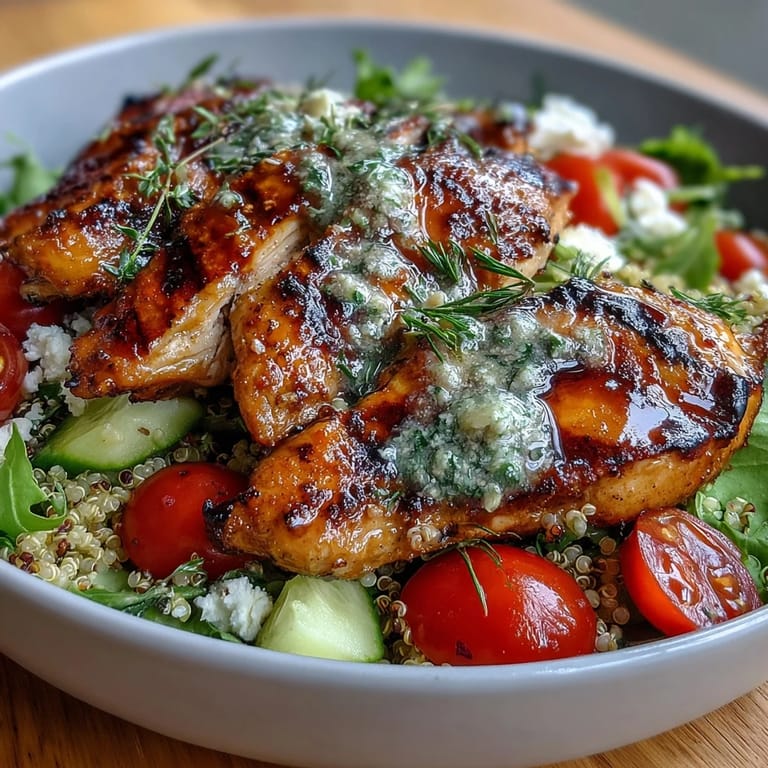
- Arrange your sliced grilled chicken on top of each bowl, then drizzle generously with the lemon vinaigrette. Finish with a sprinkle of feta cheese and fresh parsley, and serve immediately while everything still has its character.
 Save to Pinterest
 There was a moment when I realized this bowl had become a regular thing in my rotation, not because I was forcing myself to eat healthily, but because I genuinely wanted it. That shift from obligation to genuine desire is when you know a recipe has found its place in your kitchen.
Temperature and Timing Secrets
The magic of this bowl lives partly in the temperature contrast—warm grain against cool, crisp vegetables with hot grilled chicken bringing it all together. I've tried assembling these bowls hours ahead, and they're fine, but there's a texture and vitality that only comes from eating it relatively fresh. The vegetables don't get soggy from the dressing because you're eating it soon after assembly, and the chicken stays juicy instead of drying out as it cools.
Customization Without Losing the Plot
What makes this bowl so forgiving is that you can swap almost everything and still land somewhere delicious. I've made it with shrimp when I wanted something lighter, with chickpeas when I was avoiding meat, and with whatever vegetables looked good at the market that week. The lemon vinaigrette is the constant that ties everything together, so as long as that's perfect, you're winning.
Pairing and Storage Wisdom
These bowls are perfect alongside a crisp Sauvignon Blanc on warm evenings, or with sparkling water and lemon if you're keeping things simple. They also pack beautifully for lunch the next day if you keep the dressing separate and add it just before eating—I've learned the hard way that timing is everything when it comes to texture.
- Assemble your components ahead of time and dress just before serving for maximum freshness and crispness.
- The lemon vinaigrette keeps in a jar in the refrigerator for up to five days, so you can make extra and use it on other salads.
- If you're meal prepping, store the grain, vegetables, and chicken separately and combine on your own schedule for the best results.
 Save to Pinterest
 This bowl has become my reminder that the simplest meals often satisfy the deepest cravings. It's the kind of food that makes you feel good while you're eating it and better afterward.
Recipe FAQs
- → How do I make the lemon vinaigrette?
Whisk together extra-virgin olive oil, fresh lemon juice, lemon zest, Dijon mustard, minced garlic, honey, salt, and pepper until emulsified for a bright, tangy dressing.
- → Can I substitute the chicken with a vegetarian option?
Yes, grilled shrimp, tofu, or chickpeas work well as alternatives to maintain protein while keeping the dish flavorful.
- → What is the best way to grill the chicken?
Marinate chicken breasts with olive oil, oregano, smoked paprika, salt, and pepper, then grill over medium-high heat for 5-6 minutes per side until cooked through.
- → Which grains can be used as a base for the bowl?
Cooked quinoa or brown rice provide a wholesome, nutty base that complements the grilled chicken and vegetables perfectly.
- → Is feta cheese necessary for this dish?
Feta cheese is optional but adds a creamy, salty contrast that enhances the fresh ingredients and vinaigrette flavors.